
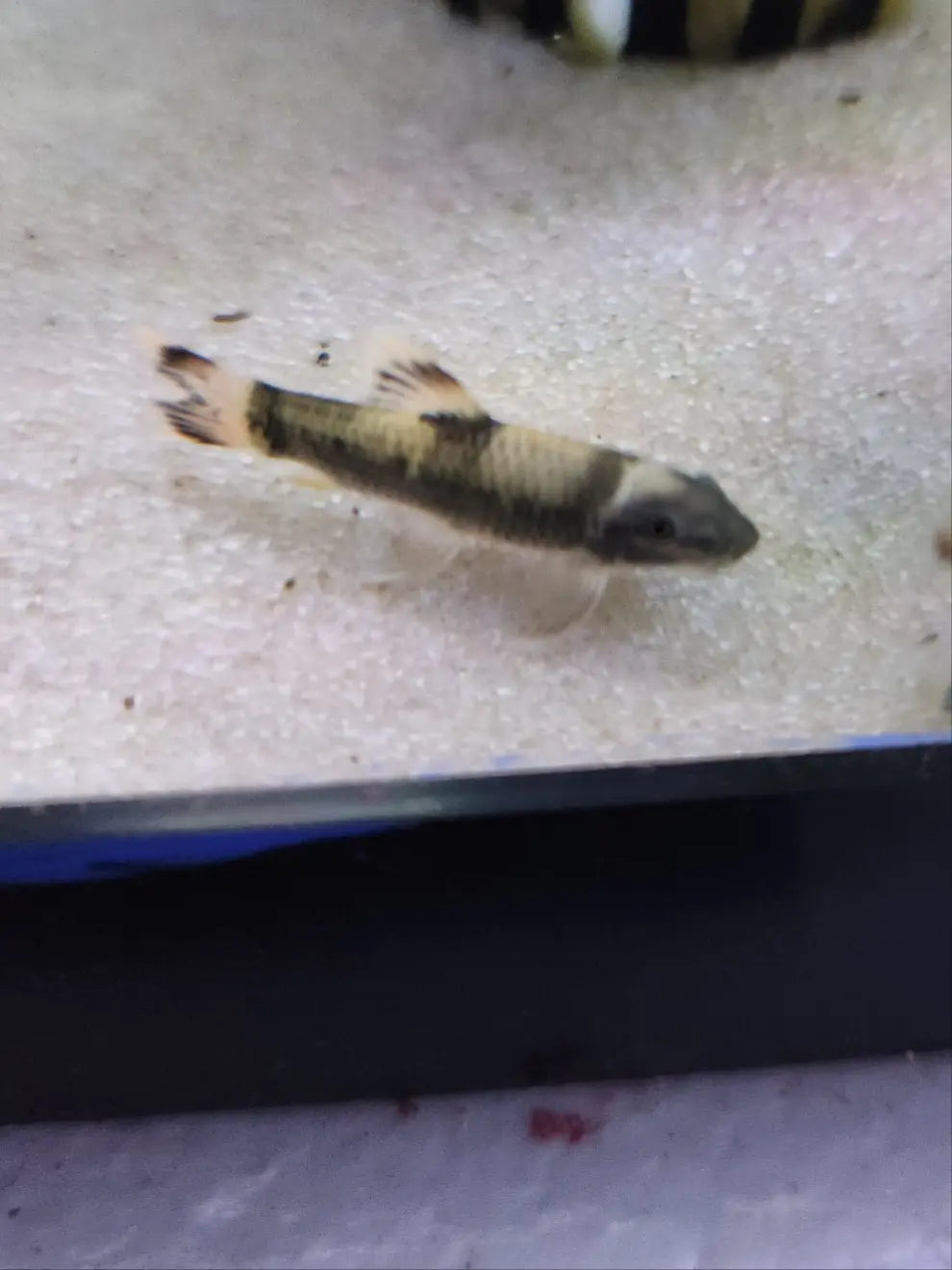
Panda Garra – Garra flavatra
The Panda Garra (Garra flavatra) is a striking freshwater fish known for its bold black-and-gold panda-like markings, active personality, and natural algae-grazing behavior. Native to fast-flowing streams in Myanmar, this unique species is both beautiful and functional in the aquarium.
Panda Garras are popular with aquascapers and freshwater hobbyists because they help graze on algae, biofilm, and leftover foods while adding movement and personality to the tank. They do especially well in planted aquariums, river-style setups, and peaceful community tanks with clean, oxygen-rich water.
Key Features
- Distinctive black-and-gold panda markings
- Active algae grazer and biofilm feeder
- Peaceful freshwater community fish
- Hardy and adaptable with proper care
- Great for planted and river-style aquariums
- Best in tanks with good flow and oxygenation
Care Guide
- Scientific Name: Garra flavatra
- Common Name: Panda Garra
- Origin: Myanmar
- Care Level: Easy to moderate
- Temperament: Peaceful and active
- Adult Size: Approximately 3–3.5 inches
- Lifespan: Approximately 5–8 years with proper care
- Minimum Tank Size: 20 gallons or larger recommended
- Tank Level: Bottom to midwater
- Water Temperature: 72–79°F
- pH Range: 6.5–7.5
- GH Range: 4–10 dGH
- Diet: Omnivore with algae and biofilm grazing behavior
Why Choose a Panda Garra?
Panda Garras are a great choice for aquarists who want an active, useful, and eye-catching freshwater fish. Their black-and-gold pattern gives them a unique look, while their grazing behavior helps them search surfaces for algae, biofilm, and small food particles.
They are not a replacement for regular aquarium maintenance, but they can be a helpful part of a balanced cleanup crew in the right setup. Their curious behavior and constant movement make them fun to watch in planted and aquascaped tanks.
Ideal Tank Setup
Panda Garras do best in clean, stable aquariums with good filtration, moderate water flow, and high oxygen levels. Smooth rocks, driftwood, plants, and open surfaces provide grazing areas and help create a natural environment.
A planted or river-style aquarium with open swimming space and hiding areas works well. Avoid sharp decor and maintain clean water with regular water changes, since Panda Garras are most active and healthy in well-oxygenated aquariums.
Compatible Tankmates
- Peaceful tetras
- Rasboras
- Danios
- Rainbowfish
- Corydoras catfish
- Peaceful barbs
- Hillstream loaches with compatible conditions
- Snails
- Shrimp with caution and proper cover
Tankmates to Avoid
- Aggressive cichlids
- Large predatory fish
- Very slow or delicate fish that may be stressed by active movement
- Fish that require very different water conditions
- Overcrowded bottom-dwelling setups
Diet & Feeding
Panda Garras naturally graze on algae, biofilm, and surface growth, but they still need a balanced diet. Offer algae wafers, sinking pellets, vegetable-based foods, blanched zucchini, spinach, cucumber, and occasional frozen foods such as brine shrimp, daphnia, or bloodworms.
A varied diet helps support strong color, activity, and long-term health. Make sure enough food reaches the bottom so they are not outcompeted by faster midwater fish.
Care Tips
- Provide clean, oxygen-rich water
- Use good filtration and moderate water flow
- Offer rocks, driftwood, and plants for grazing surfaces
- Supplement algae grazing with wafers and vegetables
- Keep with peaceful, active community fish
- Maintain stable water conditions with regular water changes
Frequently Asked Questions
Is the Panda Garra aggressive?
No. Panda Garras are generally peaceful and do well with other non-aggressive community fish. They are active and may occasionally chase their own kind, especially in smaller tanks.
How big do Panda Garras get?
Panda Garras typically reach approximately 3–3.5 inches as adults.
What size tank does a Panda Garra need?
A 20 gallon aquarium or larger is recommended, especially because they are active fish that appreciate swimming space, grazing surfaces, and good water flow.
Are Panda Garras good algae eaters?
Yes. Panda Garras naturally graze on algae and biofilm, but they should still be fed algae wafers, sinking foods, and blanched vegetables for a balanced diet.
Can Panda Garras live with shrimp?
They can usually live with adult shrimp in planted aquariums with proper cover, but very tiny baby shrimp may be eaten by many fish.
Do Panda Garras need high flow?
They do not require extreme current, but they do best in clean, oxygen-rich aquariums with good filtration and moderate water movement.
Are Panda Garras good for planted tanks?
Yes. Panda Garras are great for planted aquariums because they graze on surfaces, stay active, and add movement without usually damaging healthy plants.
Are these fish available for shipping?
No. Live fish are available for in-store purchase or local pickup only at Tropical Treasures Wyo in Cheyenne, Wyoming.
Available at Tropical Treasures Wyo
Panda Garras are active freshwater algae-grazing fish for planted aquariums, river-style tanks, and peaceful community setups. Visit Tropical Treasures Wyo in Cheyenne, Wyoming, to shop algae eaters, freshwater fish, schooling fish, shrimp, snails, live aquarium plants, fish food, filtration supplies, and aquarium care products. Live livestock is available for in-store purchase or local pickup only.
Explore More Aquarium Products:
Low stock: 8 left
Couldn't load pickup availability
Explore Related Aquarium Products: