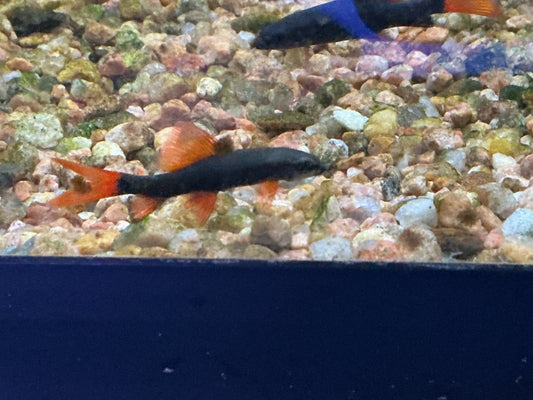
Live Fish Notice: Barbs, danios, sharks, and other live fish are available for in-store purchase or local pickup only at Tropical Treasures Wyo in Cheyenne, Wyoming. We are not shipping live fish at this time.
Shop our selection of freshwater barbs, the active, hardy schooling fish that bring nonstop energy and color to a community aquarium. Barbs are fast, playful, and wonderfully easy to keep, which makes them a favorite for both beginners and experienced hobbyists who want a lively, dynamic tank. At Tropical Treasures in Cheyenne we hand-select healthy, well-conditioned barbs so you bring home fish that are active and ready to school.
Barbs belong to the cyprinid family alongside danios and rasboras, and like their relatives they're happiest in groups. Keep them in numbers and you'll see better color, more natural behavior, and far less fin-nipping.
Popular Barb Varieties
Our barb selection rotates with each shipment, but you'll frequently find favorites like:
-
Cherry barbs — peaceful, bright-red, and one of the most community-friendly barbs.
-
Tiger & albino tiger barbs — bold, fast schoolers best kept in larger groups.
-
Odessa & black ruby barbs — striking color that intensifies as they mature.
-
Roseline (Denison) sharks & danios — active torpedo-shaped cyprinids that love current.
For more on keeping active schoolers happy, see our guide to the best schooling fish for freshwater aquariums.
Barb Fish Collection: Species, Colors and Special Orders
Our barb fish collection features a variety of colorful schooling fish, and we can inquire about specialty varieties through our suppliers. Current stock changes regularly, so please contact us to confirm availability, size, pricing and special-order options before visiting for a particular fish.
Tiger Barb and Albino Tiger Barb
The tiger barb is an energetic schooling fish with bold stripes; the albino tiger barb is a pale selectively bred color form. Tiger barbs may be fin nippers, especially when stressed or kept in undersized groups, so provide a sizable school, active swimming space and robust, compatible companions.
Cherry Barb, Black Ruby Barb, Rosy Barb and Odessa Barb
The generally peaceful cherry barb works well in many appropriately stocked community tanks. Black ruby barb, rosy barb and Odessa barb are also popular aquarium fish, but they differ in adult size, activity and preferred temperature. Choose species for the conditions of your own tank rather than assuming every barb has identical care needs.
Denison Barb, Roseline Shark and Redline Torpedo Barb
The Denison barb (Sahyadria denisonii) is also sold under the names roseline shark and redline torpedo barb. This streamlined species of cyprinid fish becomes relatively large and thrives with generous horizontal swimming room, excellent water quality and well-oxygenated water with moderate flow. It is not a true shark.
Feeding and Compatibility for Active Barb Fish
Barbs are often active swimmers and should be kept in suitable same-species groups. Match tankmates by size, behavior and water conditions; a peaceful community tank may suit cherry barbs, whereas active tiger barbs may trouble slow, long-finned fish. Offer quality prepared foods supplemented, where appropriate, with live or frozen food such as brine shrimp or daphnia. A varied diet and regular aquarium maintenance help keep fish healthy.
Barb Care Tips
Barbs are hardy and adaptable, but they still need a fully cycled, stable aquarium with good filtration and plenty of swimming room. Keep them in groups of six or more of the same species to spread out their energy and reduce nipping. They appreciate open water for swimming along with live plants and driftwood for cover. Feed a varied diet of quality flakes, micro pellets, and frozen foods, and keep up with regular water changes to keep their color vivid.
Best Tank Mates for Barbs
Peaceful barbs like cherry barbs mix well with most community fish, including tetras, rasboras, corydoras catfish, and peaceful loaches. More boisterous species like tiger barbs do best with other fast, robust fish and should be kept away from long-finned tankmates such as fancy guppies or bettas, which can become targets for fin-nipping.
FAQ: Barbs & Cyprinids
Do barbs nip fins?
Some barbs can nip fins, especially Tiger Barbs kept in small groups. Keeping them in larger schools of six or more helps spread out their energy and can reduce nipping. Avoid pairing fin-nipping species with slow, long-finned fish like bettas or fancy guppies.
How many barbs should I keep together?
Most barbs do best in groups of at least six of the same species. Larger groups often show better color, more natural schooling behavior, and less stress.
Are barbs good for beginners?
Yes. Many barbs are hardy and active, making them a good choice once the aquarium is fully cycled. Cherry Barbs are one of the best beginner-friendly options because they are smaller and more peaceful.
What size tank do barbs need?
A 20-gallon or larger aquarium is best for many smaller barb species. Larger or faster species, such as Tiger Barbs, Roseline Sharks, and other active cyprinids, need more swimming space and do better in longer aquariums.
Can barbs live with tetras and rasboras?
Peaceful barbs, such as Cherry Barbs, can often live with tetras, rasboras, corydoras, and other peaceful community fish. More active or nippy species should be kept with faster, sturdy tankmates.
Stop by Tropical Treasures in Cheyenne or call us at 307-369-1118 and we'll help you pick the right barbs for your tank size and community. We're always happy to talk schooling fish before you buy.