

Tiger Barb (Puntigrus tetrazona)
Tiger Barb (Puntigrus tetrazona)
Out of stock
Live fish, shrimp, snails and aquatic plants are not shipped. Visit Tropical Treasures Wyo in Cheyenne, Wyoming or select pickup at checkout.
Couldn't load pickup availability
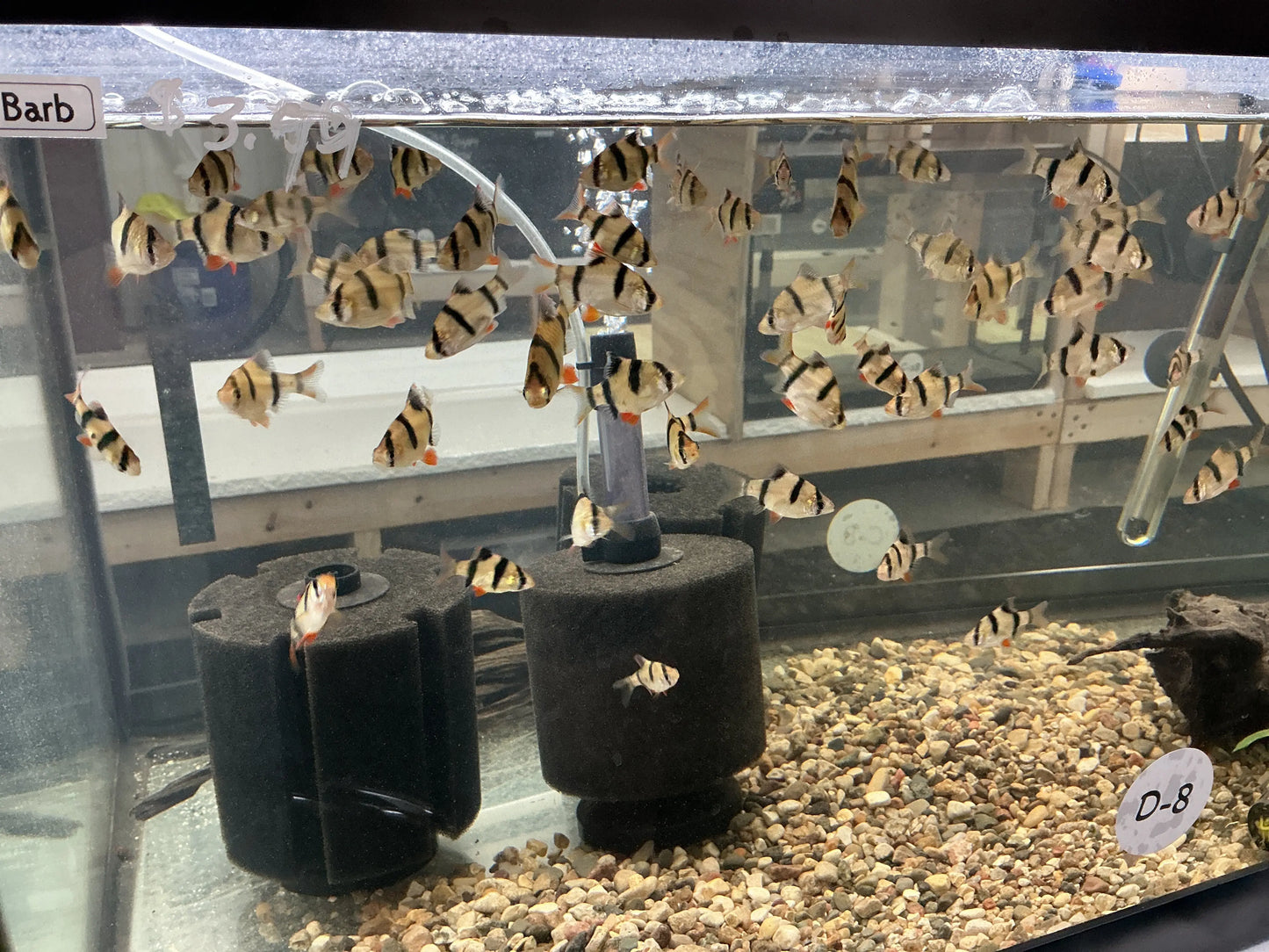
The Tiger Barb (Puntigrus tetrazona) is one of the most popular freshwater aquarium fish, known for its bold black stripes, vibrant orange-gold body, and energetic personality. Native to Southeast Asia, Tiger Barbs are active schooling fish that bring constant movement and excitement to community aquariums.
Hardy, colorful, and suitable for prepared keepers, Tiger Barbs thrive when kept in groups and make an excellent choice for aquarists looking for an active freshwater fish with plenty of personality.
Quick Facts
- Scientific Name: Puntigrus tetrazona
- Common Name: Tiger Barb
- Adult Size: 2.5–3 inches
- Temperament: Semi-aggressive
- Care Level: Easy
- Diet: Omnivore
- Lifespan: 5–7 years
- Minimum Tank Size: 30 gallons
- Water Temperature: 74–80°F
- pH Range: 6.0–7.5
- Water Hardness: 5–15 dGH
- Swimming Level: Midwater
- Schooling Fish: Yes
Why Choose Tiger Barbs?
✔ Bold orange and black striped coloration
✔ Active and entertaining behavior
✔ Hardy and adaptable species
✔ Excellent schooling fish
✔ Great for larger community aquariums
✔ Active, sometimes fin-nipping; select tankmates carefully
Aquarium Setup
Tiger Barbs thrive in aquariums with open swimming areas combined with plants, driftwood, and rockwork. A well-decorated aquarium helps reduce aggression and provides a more natural environment.
Because Tiger Barbs are highly active, adequate swimming space is important.
Recommended setup:
- 20-gallon aquarium minimum
- Open swimming areas
- Live plants
- Driftwood and rocks
- Moderate water flow
- Secure lid
Diet & Feeding
Tiger Barbs are omnivores and readily accept a wide variety of foods:
- Tropical flakes
- Quality pellets
- Frozen bloodworms
- Brine shrimp
- Daphnia
- Live foods
- Vegetable-based foods
A varied diet helps maintain bright coloration and overall health.
Tank Mates
Tiger Barbs do best with active fish that can match their energy level, including:
- Green Tiger Barbs
- Cherry Barbs
- Danios
- Rainbowfish
- Corydoras
- Larger Rasboras
- Loaches
- Robust Tetras
Avoid housing with:
- Bettas
- Angelfish
- Fancy Guppies
- Long-finned Gouramis
- Other slow-moving, long-finned fish
Schooling Behavior
Tiger Barbs should always be kept in groups of at least six individuals. Larger groups help spread out social behavior and significantly reduce fin-nipping tendencies.
For best results:
- Minimum group size: 6
- Recommended group size: 8–12+
Frequently Asked Questions
Are Tiger Barbs good for community tanks?
Yes, when kept with appropriately sized and active tank mates. They do best in groups and may nip fins if kept in small numbers.
Do Tiger Barbs need a heater?
Yes. They thrive in tropical water temperatures between 74–80°F.
Are Tiger Barbs beginner friendly?
Absolutely. They are hardy, adaptable, and easy to care for.
What is the ideal tank setup?
A planted aquarium with open swimming space, driftwood, and stable water conditions works best.
Can Tiger Barbs live with long-finned fish?
Generally no. Their playful nature can lead to fin-nipping of slow-moving fish with flowing fins.
Available at Tropical Treasures Wyo
Shop healthy Tiger Barbs at Tropical Treasures Wyo in Cheyenne, Wyoming. These active freshwater schooling fish are perfect for community aquariums, planted tanks, and hobbyists looking for colorful, energetic fish.
Care and identification update: Tiger Barbs can be persistent fin-nippers even when kept in groups. A school of at least eight to ten reduces but does not eliminate the risk; avoid bettas, angelfish, fancy guppies and other slow long-finned species.
In-Store Pickup Only — Live Fish
Live fish are not available for shipping. Available for in-store purchase or local pickup at Tropical Treasures Wyo in Cheyenne, Wyoming only. Please select in-store pickup at checkout.
Live Fish Sales Policy: Please inspect your fish before leaving the store. All live fish sales are final once they leave our store. We're happy to help with acclimation and care questions.
Explore Related Aquarium Products: