
Black Flying Fox (Epalzeorhynchos kalopterus) Live Freshwater Fish
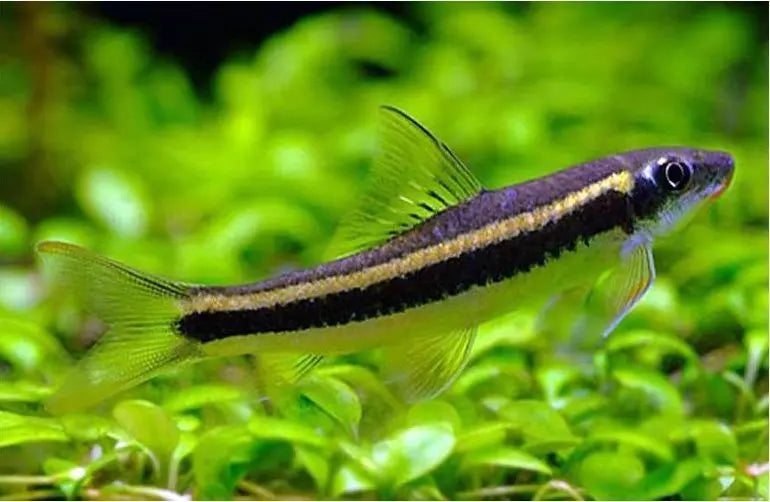
The Black Flying Fox, scientifically known as Epalzeorhynchos kalopterus, is an active and attractive freshwater fish often chosen for its algae-grazing behavior and sleek black lateral stripe accented by lighter edging. It is frequently mistaken for Siamese algae eaters, but Flying Foxes have a bit more attitude and personality.
Black Flying Foxes are excellent additions to larger community aquariums where they can establish territory and remain active without harassing tankmates. When young, they are efficient algae grazers; as they mature, they should be supplemented with a balanced omnivorous diet.
Key Characteristics
Active algae-grazing fish
Bold black stripe with gold edging
Hardy and adaptable
Best suited for larger aquariums
Adds movement and personality
Care Requirements
- Difficulty: Easy to Moderate
- Temperament: Semi-aggressive (territorial as adults)
- Adult Size: ~6 inches
- Tank Size: 30 gallons or larger
- Temperature: 7279°F
- pH: 6.07.5
- Diet: Omnivore (algae, wafers, pellets, frozen foods)
🪵 Provide driftwood, rocks, and hiding places to reduce aggression.
Tank Compatibility
Good Tankmates:
- Barbs
- Larger tetras
- Gouramis
- Rainbowfish
- Loaches
Avoid:
- Similar-shaped algae eaters
- Small timid fish
- Other Flying Foxes in small tanks
Ideal For
- Medium to large freshwater aquariums
- Community tanks with active fish
- Aquarists needing algae control
- Hobbyists with some experience
Product Details
- Common Name: Black Flying Fox
- Scientific Name: Epalzeorhynchos kalopterus
- Origin: Southeast Asia
- Aquarium Type: Freshwater
- Diet: Omnivore
- Temperament: Semi-aggressive
FAQs Black Flying Fox
Q: Is a Black Flying Fox the same as a Siamese Algae Eater?
A: No. They are often confused, but Flying Foxes are more territorial and have distinct fin and stripe markings.
Q: Are they good algae eaters?
A: Yes, especially when young. Adults should be fed a varied diet.
Q: Can more than one be kept together?
A: Only in very large tanks with ample space and hiding spots.
Q: Are they shrimp-safe?
A: Adult shrimp may be safe, but smaller shrimp could be at risk.
Q: Do they get aggressive?
A: They can become territorial as they mature, especially in smaller tanks.
Explore More Aquarium Products:
Out of stock
Couldn't load pickup availability
Explore Related Aquarium Products: