

Red Spotted Nerite Snail
Red Spotted Nerite Snail
Low stock: 10 left
Live fish, shrimp, snails and aquatic plants are not shipped. Visit Tropical Treasures Wyo in Cheyenne, Wyoming or select pickup at checkout.
Couldn't load pickup availability
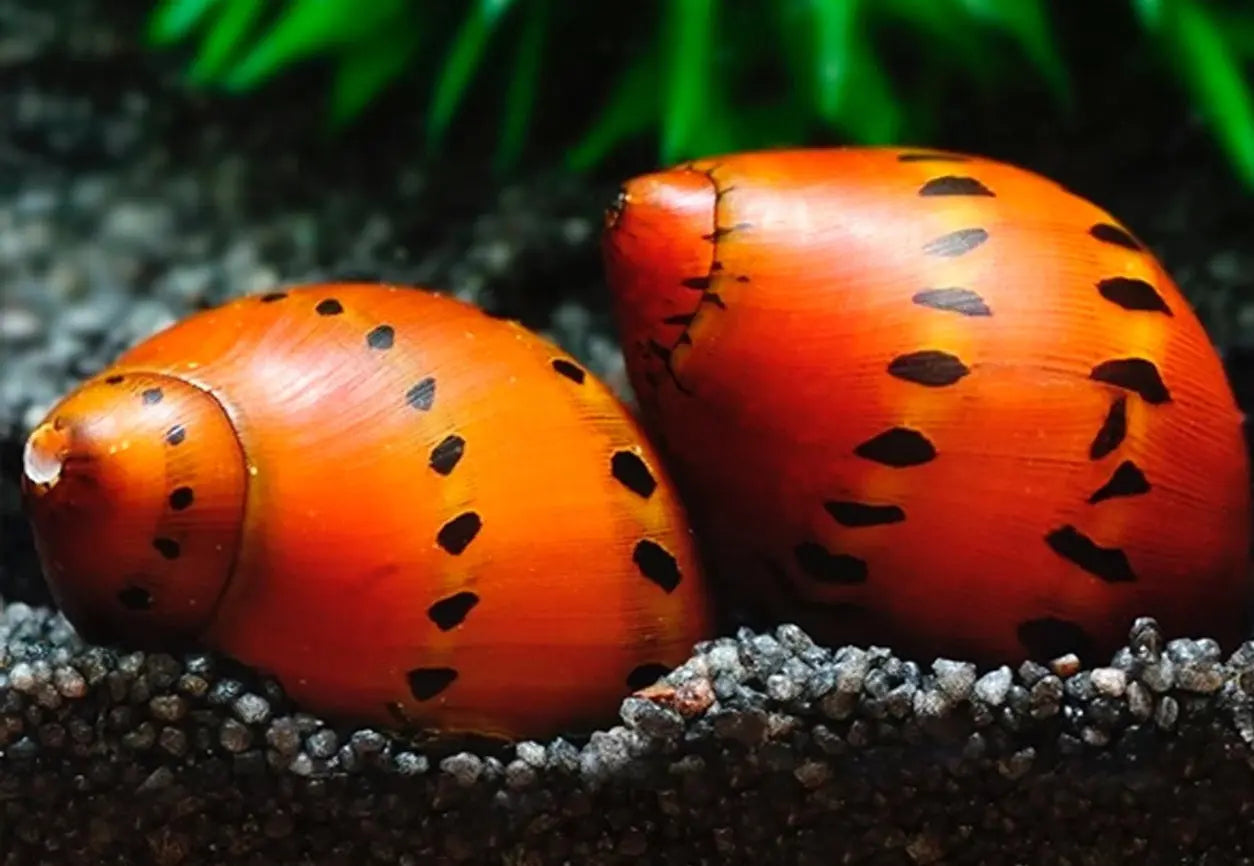
The Red Spotted Nerite Snail is a colorful freshwater algae-eating snail known for its vibrant red-orange shell decorated with distinctive dark spots and markings. This unique pattern makes each snail slightly different, adding visual interest and natural beauty to planted aquariums, shrimp tanks, and community fish setups.
Beyond their attractive appearance, Red Spotted Nerite Snails are highly valued for their ability to consume algae and biofilm without harming aquarium plants. Because Nerite Snails cannot reproduce in freshwater aquariums, they provide excellent algae control without creating unwanted snail populations.
Quick Facts
- Scientific Name: Nerite Snail (Neritidae family)
- Common Name: Red Spotted Nerite Snail
- Adult Size: Up to 1 inch
- Temperament: Peaceful
- Care Level: Easy
- Diet: Algae, biofilm, algae wafers, vegetables
- Lifespan: 1–3 years
- Minimum Tank Size: 5 gallons
- Water Temperature: 72–80°F
- pH Range: 7.0–8.2
- Water Hardness: Moderate to Hard
- Plant Safe: Yes
- Community Safe: Yes
Why Choose a Red Spotted Nerite Snail?
✔ Unique red-orange shell with dark spotted pattern
✔ Excellent algae and biofilm grazer
✔ Safe for planted aquariums and shrimp tanks
✔ Peaceful with fish and invertebrates
✔ Will not overpopulate freshwater aquariums
✔ Great addition to aquarium cleanup crews
Natural Algae Control
Red Spotted Nerite Snails actively graze on:
- Green film algae
- Brown diatom algae
- Biofilm
- Soft algae growth
- Algae on glass, rocks, driftwood, and decorations
They are one of the most effective natural algae-control solutions available for freshwater aquariums.
Aquarium Setup
Red Spotted Nerite Snails thrive in established freshwater aquariums with stable water parameters and plenty of surfaces to graze. Hard, mineral-rich water is recommended to support healthy shell development and prevent shell erosion.
A secure aquarium lid is recommended, as Nerite Snails may occasionally explore above the waterline.
Diet & Feeding
While algae is their primary food source, supplemental feeding may be necessary in very clean aquariums.
Recommended foods include:
- Algae wafers
- Spirulina wafers
- Blanched zucchini
- Cucumber
- Spinach
- Biofilm-rich surfaces
Tank Mates
Red Spotted Nerite Snails do well with:
- Tetras
- Rasboras
- Corydoras
- Guppies
- Endlers
- Platies
- Mollies
- Shrimp
- Other peaceful community fish
Avoid aggressive snail-eating fish such as puffers, large loaches, and large cichlids.
Frequently Asked Questions
Will Red Spotted Nerite Snails eat live plants?
No. They primarily graze algae and biofilm and generally leave healthy aquarium plants alone. They still need enough natural food to thrive.
Can Red Spotted Nerite Snails breed in freshwater tanks?
No. While they may lay eggs, the eggs require brackish water conditions to hatch and will not develop in freshwater aquariums.
How big do Red Spotted Nerite Snails get?
Most adults reach approximately 1 inch in size.
What do they eat if algae runs low?
Supplement their diet with algae wafers, spirulina-based foods, and blanched vegetables.
Are Red Spotted Nerite Snails good algae cleaners?
Yes. They are among the best freshwater algae-eating snails available and are highly effective at controlling film algae and diatoms.
Available at Tropical Treasures Wyo
Shop healthy Red Spotted Nerite Snails at Tropical Treasures Wyo in Cheyenne, Wyoming. These colorful freshwater algae eaters are perfect for planted aquariums, shrimp tanks, and peaceful community fish setups.
Breeding & Shell Health
Female nerite snails may lay small, hard white eggs on aquarium surfaces in freshwater. These normally do not produce baby snails in ordinary freshwater aquariums; successful development generally requires brackish or marine conditions during the larval stage. Provide stable, moderately hard to hard water with adequate calcium, and avoid prolonged acidic or very soft conditions that can erode shells. Established algae and biofilm are important food sources.
Live Aquatic Livestock — In-Store Pickup Only
Live snails and other aquatic animals are not available for shipping. Purchase in-store or arrange local pickup at Tropical Treasures Wyo in Cheyenne, Wyoming only. Please select in-store pickup at checkout.
Live Aquatic Animal Sales Policy: Inspect all livestock before leaving the store. All live aquatic animal sales are final once they leave our store. Ask our team about acclimation and species-specific care.
Explore Related Aquarium Products: