
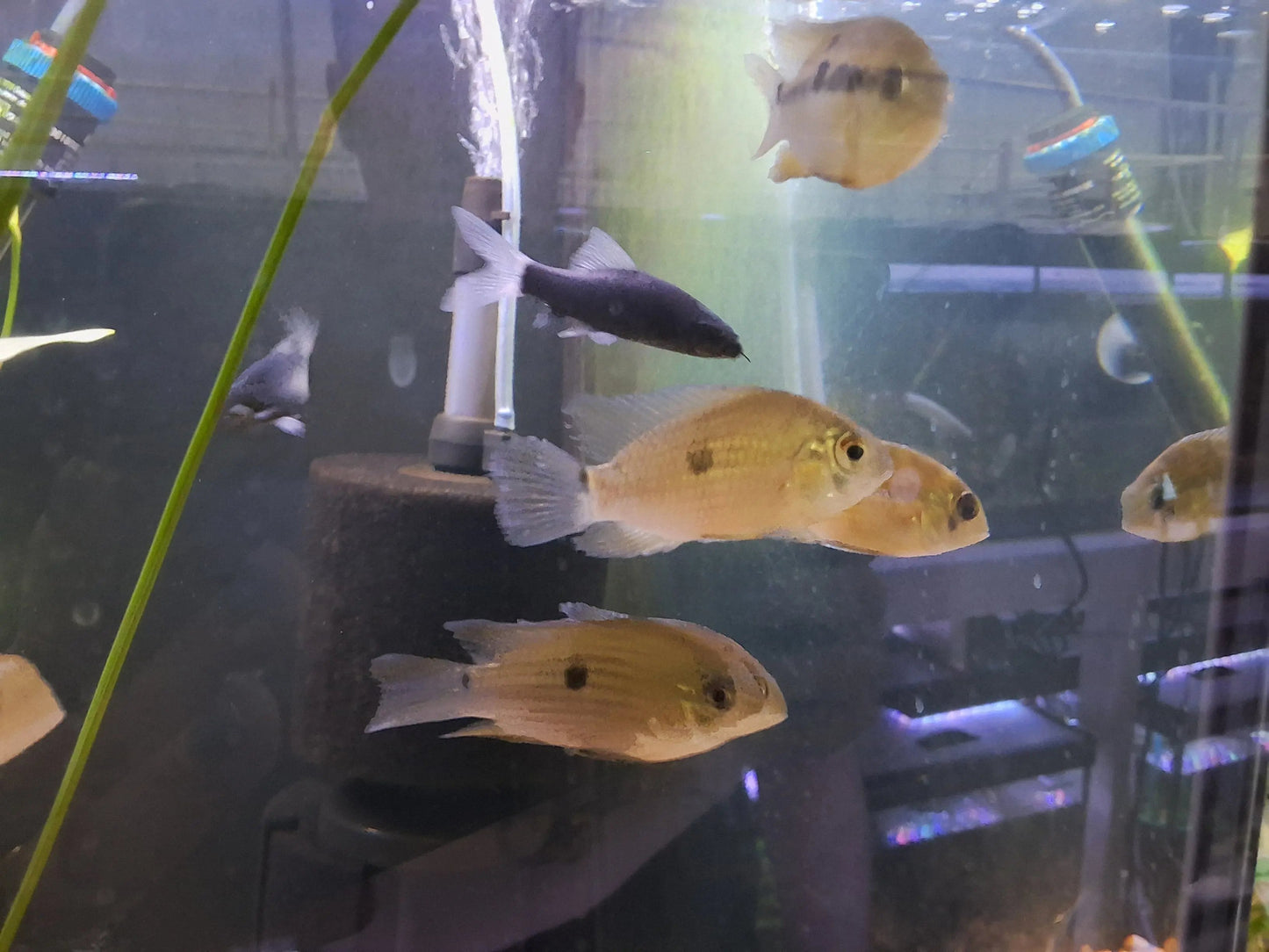
Yellow Acara
The Yellow Acara (Aequidens metae) is a beautiful South American cichlid admired for its soft golden-yellow coloration, subtle blue highlights, and elegant body shape. Native to Colombia and Venezuela, this species offers a more peaceful temperament compared to many other cichlids, making it suitable for larger community setups with compatible tank mates.
Yellow Acaras develop deeper coloration as they mature and can display stunning contrast under proper lighting. With adequate space and stable water conditions, they become hardy and rewarding centerpiece fish.
An excellent choice for aquarists wanting color and personality without extreme aggression.
Key Features & Benefits
- 💛 Soft Golden-Yellow Body Color
- 🔵 Subtle Blue Accents
- South American Origin
- 🐠 Moderate, Manageable Temperament
- 🏆 Attractive Mid-Size Showpiece
⚙️ Fish Details
Scientific Name: Aequidens metae
Common Name: Yellow Acara
Origin: Colombia & Venezuela
Temperament: Semi-peaceful
Adult Size: 6–8 inches
Tank Level: Mid to Bottom
🏡 Care Requirements
Minimum Tank Size: 55–75 gallons
Temperature: 75–82°F
pH: 6.0–7.5
Hardness: Soft to moderate
Diet: Omnivore (quality cichlid pellets, frozen foods, occasional vegetable matter)
Provide rock structures, driftwood, and open swimming space.
Tank Mates
Best kept with:
- Larger tetras
- Severums
- Geophagus
- Other peaceful South American cichlids
Avoid highly aggressive Central American species.
❓ FAQ Yellow Acara
Q: How large do they get?
A: Typically 6–8 inches in captivity.
Q: Are they aggressive?
A: Semi-peaceful; manageable in appropriately sized tanks.
Q: Can they be kept in planted tanks?
A: Yes, but secure plants well as they may dig lightly.
Q: Are they beginner friendly?
A: Suitable for intermediate hobbyists.
Explore More Aquarium Products:
Out of stock
Couldn't load pickup availability
Explore Related Aquarium Products: