

Siamese Algae Eater – Crossocheilus oblongus
Siamese Algae Eater – Crossocheilus oblongus
Low stock: 4 left
Live fish, shrimp, snails and aquatic plants are not shipped. Visit Tropical Treasures Wyo in Cheyenne, Wyoming or select pickup at checkout.
Couldn't load pickup availability
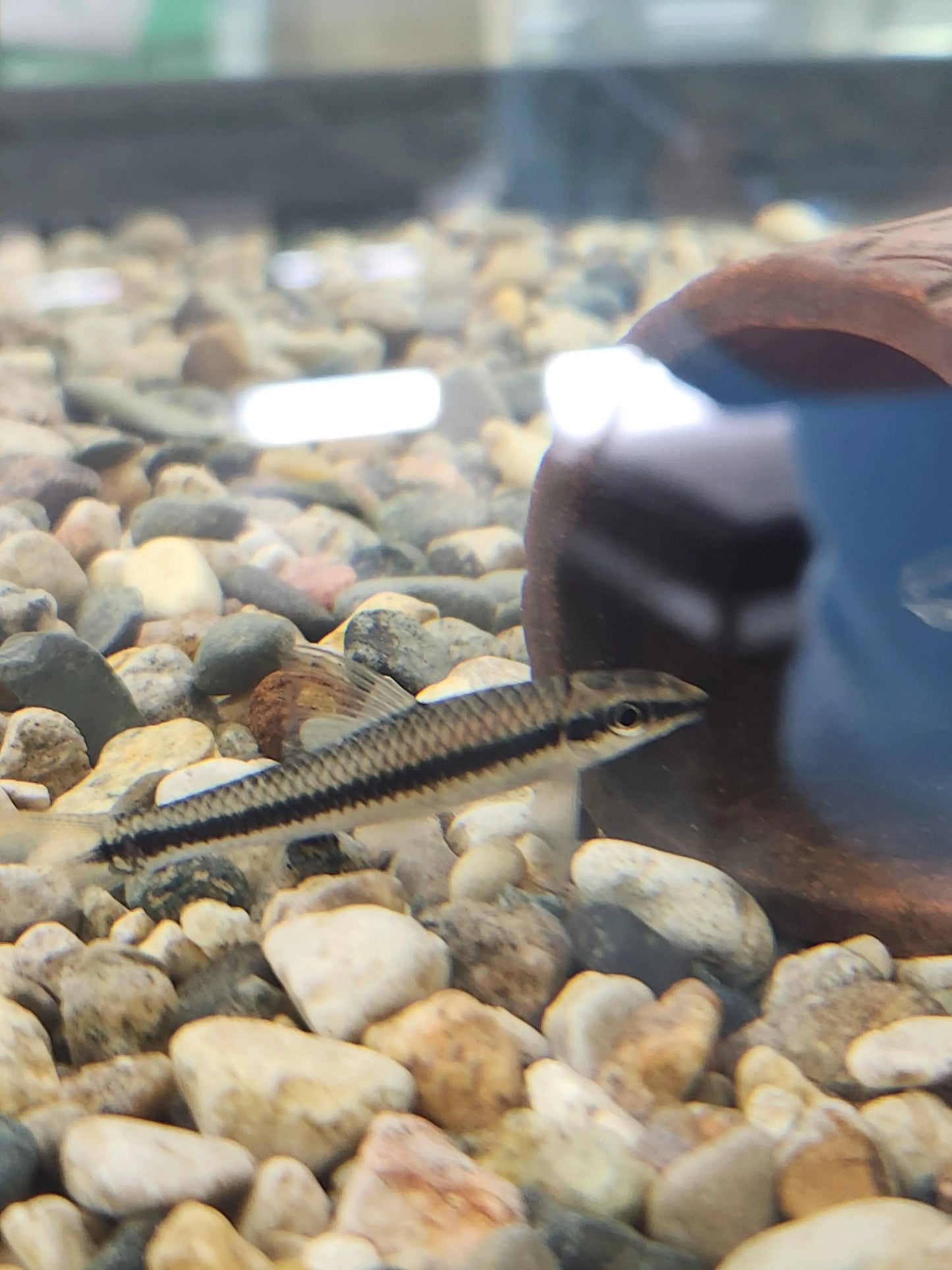
The Siamese Algae Eater (SAE) is an active Southeast Asian freshwater algae grazer sold in the aquarium trade under names such as Crossocheilus oblongus. Several similar-looking Crossocheilus species are sold as Siamese Algae Eaters, so the exact species cannot be confirmed from the trade name alone. Some individuals graze black beard (black brush) algae, softer filamentous algae, and biofilm, but algae consumption varies by species, age, and available foods.
Siamese Algae Eaters are active swimmers that need clean, well-oxygenated water, moderate current, and a long aquarium with ample swimming space. They are popular in planted tanks, although hungry fish may occasionally nibble tender plant growth; feed a varied diet instead of relying on aquarium algae alone.
Key Features
- Excellent freshwater algae grazer
- May graze black beard algae and soft hair algae, depending on species and individual fish
- Peaceful to semi-active community fish
- Great for planted aquariums and aquascapes
- Active swimmer that enjoys open space
- May be kept singly or in groups of three or more in sufficiently spacious aquariums; monitor interactions as they mature
Care Guide
- Scientific Name: Crossocheilus sp. (often sold as C. oblongus; identification requires confirmation)
- Common Name: Siamese Algae Eater
- Care Level: Easy to moderate
- Temperament: Peaceful to semi-active
- Adult Size: Approximately 5–6 inches
- Recommended Aquarium: A long, approximately 50–55 gallon or larger tank for an adult; larger footprints for groups
- Tank Level: Bottom to midwater
- Water Temperature: Approximately 68–79°F
- pH Range: 6.0–7.5
- Hardness: Soft to moderate
- Diet: Omnivore with strong algae-grazing behavior
Why Choose a Siamese Algae Eater?
Some Siamese Algae Eaters, particularly fish in the Crossocheilus langei group, are known to graze black beard algae. They may also eat softer algae and biofilm, but not every fish eats every type of algae. They are not a substitute for a balanced aquarium maintenance plan.
They should not be used as the only method of algae control, but they can be very helpful when combined with proper lighting, balanced nutrients, regular maintenance, and good filtration. Juveniles often graze more heavily on algae, while adults may need more supplemental foods as they mature.
Ideal Tank Setup
Siamese Algae Eaters do best in a stable aquarium with strong filtration, good oxygenation, moderate water movement, and open swimming areas. Driftwood, smooth rocks, plants, and hardscape provide grazing surfaces and help create a natural environment.
Plan for adult size rather than juvenile size: a long aquarium of roughly 50–55 gallons or more provides more useful swimming room for a mature Siamese Algae Eater. A group needs additional open space and hiding places so individuals can avoid one another. Keep a secure lid because active fish can jump.
Compatible Tankmates
- Peaceful tetras
- Rasboras
- Danios
- Rainbowfish
- Corydoras catfish
- Peaceful barbs
- Gouramis with caution
- Angelfish with proper space
- Snails
Tankmates to Avoid
- Aggressive cichlids
- Large predatory fish
- Very small nano fish that may be stressed by activity
- Similar-shaped fish if the aquarium is crowded
- Chinese Algae Eaters in most community tanks
- Overcrowded bottom-dwelling setups
Diet & Feeding
Siamese Algae Eaters naturally graze on algae, biofilm, and surface growth, but they still need a balanced diet. Offer algae wafers, sinking pellets, vegetable-based foods, blanched zucchini, spinach, cucumber, and occasional frozen foods such as brine shrimp, daphnia, or bloodworms.
As Siamese Algae Eaters mature, they may rely more on prepared foods and less on algae. A varied diet helps support healthy growth, activity, and long-term condition.
Care Tips
- Provide strong filtration and good oxygenation
- Offer open swimming space
- Use driftwood, rocks, and plants for grazing surfaces
- Supplement algae grazing with wafers and vegetables
- Keep with peaceful, active community fish
- Avoid confusing true Siamese Algae Eaters with similar-looking species
Siamese Algae Eater vs. Similar Fish
Fish sold as Siamese Algae Eaters may include several similar Crossocheilus species, not necessarily true Crossocheilus oblongus. The name C. oblongus has historically been used broadly for aquarium-trade fish. Other lookalikes include Flying Foxes (Epalzeorhynchos kalopterus), False Siamese Algae Eaters, and Chinese Algae Eaters (Gyrinocheilus aymonieri), which can have different feeding habits and temperaments. The black lateral stripe, fins, mouth shape, and other features can help distinguish these fish, but accurate species identification may require close examination. Ask our team about the fish in the current shipment.
Frequently Asked Questions
Do Siamese Algae Eaters eat black beard algae?
Some do, particularly individuals of certain Crossocheilus species, but results are not guaranteed. Young, soft growth is generally more likely to be grazed. Long-term algae control still requires appropriate lighting, balanced nutrients, and regular maintenance.
Are Siamese Algae Eaters aggressive?
They are generally peaceful to semi-active, but they may chase similar-shaped fish or become pushy if crowded. A properly sized aquarium with open swimming space helps reduce issues.
Are Siamese Algae Eaters good for planted tanks?
Yes. Siamese Algae Eaters are popular in planted aquariums because they graze algae and biofilm without usually damaging healthy live plants.
Are Siamese Algae Eaters beginner-friendly?
They can be beginner-friendly in a properly sized, stable aquarium, but they are best for aquarists who can provide enough space, good filtration, and compatible tankmates.
How big do Siamese Algae Eaters get?
Siamese Algae Eaters can reach approximately 5–6 inches as adults, so they need more space than smaller algae eaters.
What size tank does a Siamese Algae Eater need?
For a mature fish, plan on a long aquarium of approximately 50–55 gallons or more to provide ample horizontal swimming space. Groups need a larger footprint and areas to retreat from one another.
Do Siamese Algae Eaters need to be kept in groups?
They may be kept singly or in groups of three or more if the aquarium is large enough. Some individuals become territorial with their own kind as they mature, so provide extra room, cover, and a way to separate fish if needed.
What do Siamese Algae Eaters eat?
They eat algae, biofilm, algae wafers, sinking pellets, vegetable-based foods, blanched vegetables, and occasional frozen foods. Adults should be supplemented with prepared foods.
Are these fish available for shipping?
No. Live fish are available for in-store purchase or local pickup only at Tropical Treasures Wyo in Cheyenne, Wyoming.
Available at Tropical Treasures Wyo
Siamese Algae Eaters are active freshwater algae-grazing fish for planted aquariums, aquascapes, and larger peaceful community tanks. Visit Tropical Treasures Wyo in Cheyenne, Wyoming, to shop algae eaters, freshwater fish, schooling fish, shrimp, snails, live aquarium plants, fish food, filtration supplies, and aquarium care products. Live livestock is available for in-store purchase or local pickup only.
Important Oddball Care Note
Siamese Algae Eaters grow into active medium-sized fish and need substantial swimming room as adults. Algae grazing varies by individual and diet; they must also receive suitable prepared food.
Live fish are available for in-store purchase or local pickup only at Tropical Treasures Wyo in Cheyenne, Wyoming. No livestock shipping.
In-Store Pickup Only — Live Fish
Live fish are not available for shipping. Available for in-store purchase or local pickup at Tropical Treasures Wyo in Cheyenne, Wyoming only. Please select in-store pickup at checkout.
Live Fish Sales Policy: Please inspect your fish before leaving the store. All live fish sales are final once they leave our store. We're happy to help with acclimation and care questions.
Explore Related Aquarium Products: