

Sawbwa resplendens Asian Rummynose Rasbora
Sawbwa resplendens Asian Rummynose Rasbora
15 in stock
Live fish, shrimp, snails and aquatic plants are not shipped. Visit Tropical Treasures Wyo in Cheyenne, Wyoming or select pickup at checkout.
Couldn't load pickup availability
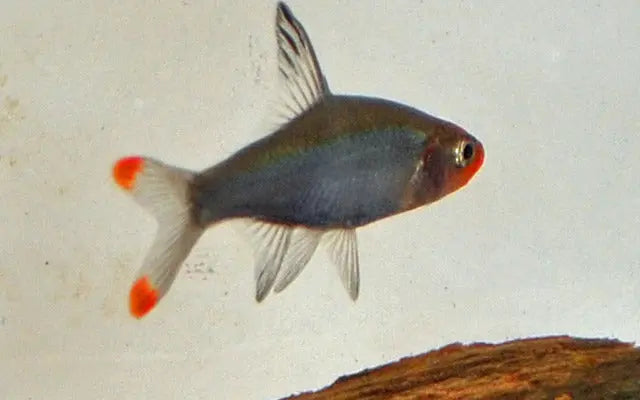
The Asian Rummynose Rasbora (Sawbwa resplendens), also called the Burmese Rummynose or Rummynose Rasbora, is a small freshwater fish native to the Inle Lake region of Myanmar. Mature males are known for a silvery body, red nose, and contrasting blue markings near the tail; females are generally less colorful. This peaceful, active species is best kept in a group in a mature aquarium with stable, cooler-to-moderate water conditions.
Species distinction: This Asian fish is not the South American Rummy Nose Tetra. Despite their similar common names, they are different species with different water requirements.
Asian Rummynose Rasbora Care Guide
- Scientific name: Sawbwa resplendens
- Common names: Asian Rummynose Rasbora, Burmese Rummynose, Asian Rummy Nose
- Origin: Inle Lake region, Myanmar
- Adult size: Approximately 1.5–2 inches
- Recommended aquarium: 20 gallons or larger, with open swimming room and planted cover
- Group size: At least 8; preferably 10 or more where space permits
- Temperature: Approximately 64–72°F for routine care; avoid prolonged hot tropical conditions
- pH: Approximately 7.0–8.0, with stable neutral-to-alkaline water
- Hardness: Moderately hard to hard water is generally suitable
- Temperament: Peaceful, social, and active
- Care level: Moderate, especially when matching water temperature and chemistry
- Diet: Small omnivorous foods including fine flakes, micro pellets, and appropriate frozen or live foods
Aquarium Setup and Grouping
Provide a fully cycled, well-filtered aquarium with live plants, open swimming areas, gentle-to-moderate flow, and stable water conditions. A suitable group helps the fish feel secure and display natural social behavior. Keep enough cover to reduce stress without overcrowding the swimming area.
Tankmates and Shrimp Compatibility
Choose peaceful, similarly sized fish that tolerate the same cooler, neutral-to-alkaline water conditions. Some compatible ricefish and other small community fish may be suitable after checking their individual requirements. Avoid aggressive species and tropical fish needing constantly high temperatures. Adult shrimp may coexist, but very small shrimplets can be eaten.
Feeding
Offer fine flakes, suitably sized micro pellets, and occasional small frozen or live foods such as baby brine shrimp, daphnia, and cyclops. Feed modest portions and ensure all individuals can access the food.
Frequently Asked Questions
Is Sawbwa resplendens the same as the Asian Rummynose Rasbora? Yes. Asian Rummynose Rasbora and Burmese Rummynose are common names used for Sawbwa resplendens.
Is the Asian Rummynose a Rummy Nose Tetra? No. Sawbwa resplendens comes from Myanmar and is not the same fish as the South American Rummy Nose Tetra.
How many Asian Rummynose Rasboras should I keep? Keep at least eight, preferably ten or more in an aquarium with sufficient swimming room.
Do Asian Rummynose Rasboras need cooler water? They generally do best at cooler-to-moderate temperatures rather than in persistently hot tropical aquariums.
Why are some Burmese Rummynose fish less colorful? Mature males usually develop stronger red and blue markings than females, and coloration also varies with age, health, and conditions.
Asian Rummynose Rasboras in Cheyenne, Wyoming
Visit Tropical Treasures Wyo for freshwater schooling fish and aquarium supplies. Contact the store to confirm current availability and individual fish size before visiting.
Live fish are available for in-store purchase or local pickup only. We do not ship livestock.
All live fish sales are final once fish leave the store. Please inspect your fish before leaving; our staff can help with acclimation and care questions.
Explore Related Aquarium Products: