
Indian Peacock Eel – Macrognathus siamensis
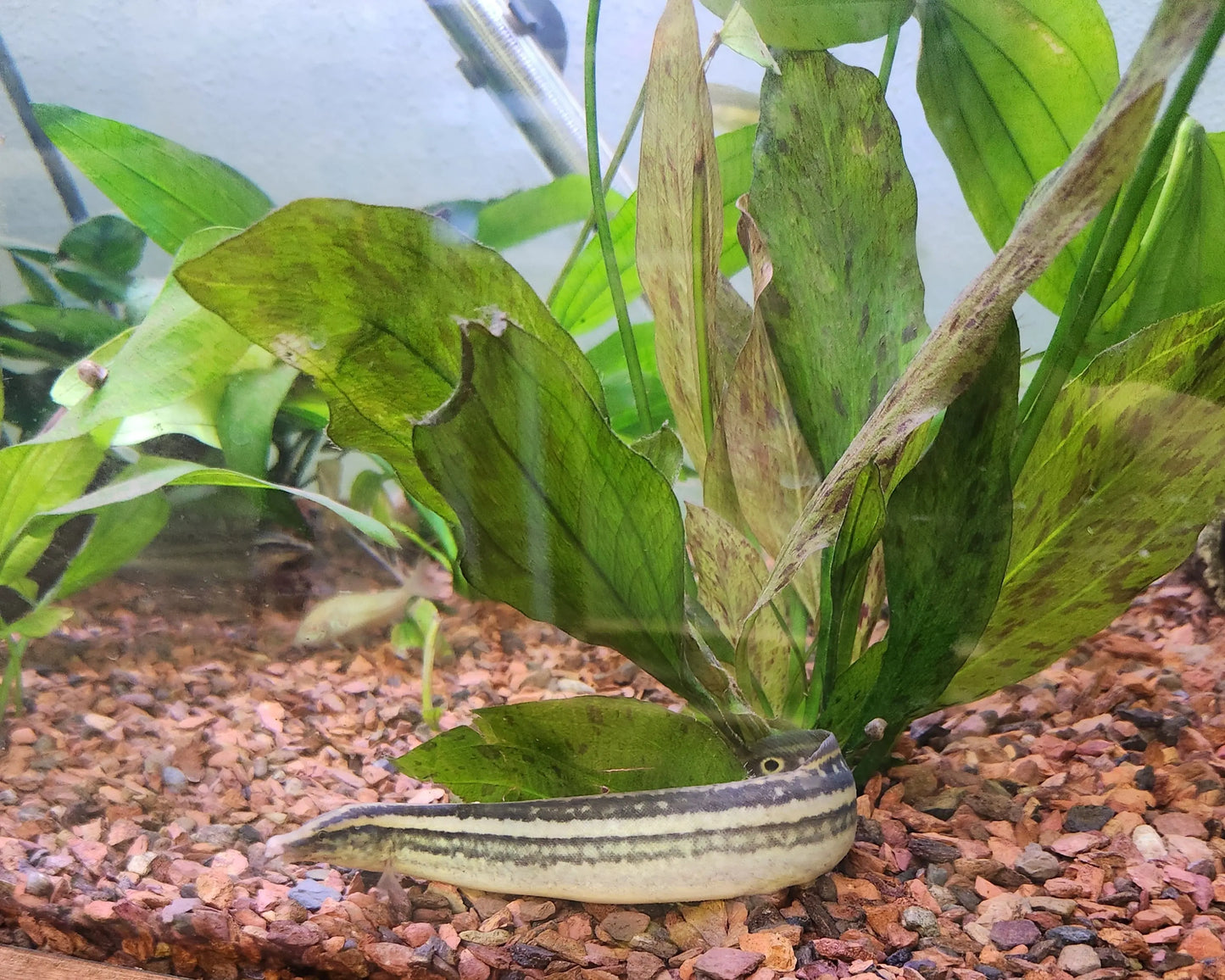
The Indian Peacock Eel, also known as Macrognathus siamensis, is a fascinating freshwater spiny eel known for its long eel-like body and distinctive eye-spot markings near the tail. Despite its unusual appearance, this species is generally peaceful and can do well in properly planned freshwater community aquariums.
Peacock Eels are natural burrowers that thrive in aquariums with soft sand substrate, hiding places, calm tank mates, and a secure lid. Their unique behavior, nocturnal habits, and striking pattern make them a standout choice for aquarists looking for something different from typical community fish.
Key Features
- Unique freshwater spiny eel with an elongated body
- Distinctive eye-spot markings near the tail
- Peaceful temperament with properly chosen tank mates
- Interesting burrowing, hiding, and foraging behavior
- Great specialty fish for experienced freshwater aquarists
- Best kept in aquariums with soft sand and a secure lid
Indian Peacock Eel Care Information
- Scientific Name: Macrognathus siamensis
- Common Name: Indian Peacock Eel, Peacock Eel
- Fish Type: Freshwater spiny eel
- Temperament: Peaceful, but may eat very small fish
- Adult Size: Up to 10–12 inches
- Minimum Tank Size: 30 gallons or larger
- Temperature: 75–82°F
- pH: 6.5–7.5
- Diet: Carnivorous; frozen, live, and sinking meaty foods
- Care Level: Moderate
- Tank Level: Bottom-dwelling and burrowing
Tank Setup
A soft sand substrate is strongly recommended for Indian Peacock Eels because they naturally burrow and may injure themselves on sharp gravel. Provide caves, driftwood, rockwork, plants, and shaded hiding areas so the eel can feel secure.
A tight-fitting lid is very important because Peacock Eels can be escape artists, especially when stressed or exploring at night. Keep water quality stable and avoid overly aggressive tank mates that may harass them while they are hiding or feeding.
Tank Mates
Indian Peacock Eels can live with peaceful to semi-aggressive freshwater fish that are too large to be eaten. Avoid tiny fish, small fry, and very aggressive species. Good tank mates may include larger peaceful community fish, calm cichlids, gouramis, loaches, and medium-sized catfish.
- Larger tetras
- Peaceful cichlids
- Gouramis
- Loaches
- Medium-sized catfish
- Other calm fish too large to fit in their mouth
Feeding
Indian Peacock Eels are carnivorous and usually prefer frozen or live foods. Offer a varied diet of bloodworms, brine shrimp, mysis shrimp, blackworms, chopped meaty foods, and quality sinking carnivore foods.
Some Peacock Eels may take time to accept prepared foods, especially when newly introduced. Feeding near lights-out or using sinking foods can help make sure they get enough food before faster tank mates eat everything.
Best Uses in Freshwater Aquariums
- Specialty freshwater aquariums
- Peaceful community tanks with larger tank mates
- Soft sand aquariums
- Planted tanks with hiding areas
- Oddball freshwater fish setups
- Bottom-dwelling fish displays
Frequently Asked Questions
Are Indian Peacock Eels aggressive?
No. Indian Peacock Eels are generally peaceful, but they may eat fish small enough to fit in their mouth.
Do Peacock Eels need sand?
Yes. Soft sand is strongly recommended because Peacock Eels like to burrow. Sharp gravel can damage their skin.
Can Indian Peacock Eels live in community tanks?
Yes, they can live in community aquariums with peaceful tank mates that are not small enough to be eaten and are not overly aggressive.
Do Peacock Eels escape from aquariums?
Yes, they can escape if the tank is not covered. A secure, tight-fitting lid is strongly recommended.
What do Indian Peacock Eels eat?
They prefer meaty foods such as bloodworms, brine shrimp, blackworms, mysis shrimp, and sinking carnivore foods.
How big do Indian Peacock Eels get?
Indian Peacock Eels can reach approximately 10–12 inches as adults, so they need adequate floor space and hiding areas.
Are Peacock Eels good beginner fish?
They are better for aquarists with some experience because they need sand substrate, secure lids, careful feeding, and stable water conditions.
Available at Tropical Treasures Wyo
Indian Peacock Eels are a unique freshwater fish for aquarists looking for an interesting bottom-dwelling species with peaceful behavior and unusual markings. Visit Tropical Treasures Wyo in Cheyenne, Wyoming, or shop online for freshwater fish, oddball aquarium fish, live plants, shrimp, snails, and aquarium supplies.
Explore More Aquarium Products:
Out of stock
Couldn't load pickup availability
Explore Related Aquarium Products: