

German Blue Ram Cichlid
German Blue Ram Cichlid
Out of stock
Live fish, shrimp, snails and aquatic plants are not shipped. Visit Tropical Treasures Wyo in Cheyenne, Wyoming or select pickup at checkout.
Couldn't load pickup availability
German Blue Ram Cichlid Care — Mikrogeophagus ramirezi
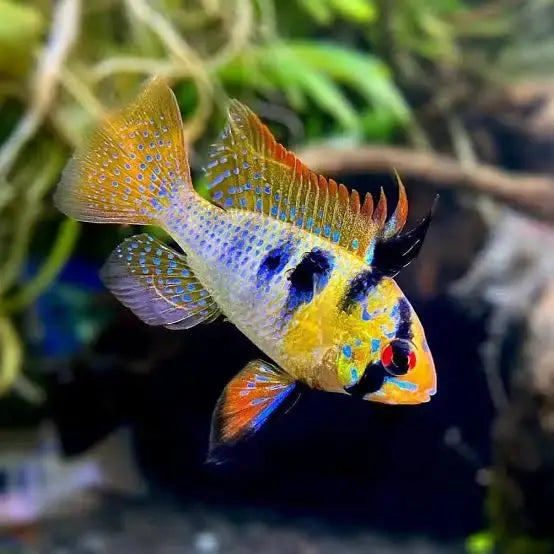
The German Blue Ram Cichlid (Mikrogeophagus ramirezi), also called the Blue Ram, Ram Cichlid or Ramirezi Cichlid, is a small South American dwarf cichlid known for shimmering blue spots, yellow-gold body coloration, and red accents. Although often peaceful toward suitably matched community fish, German Blue Rams require unusually warm, clean, stable water and are not ideal for a newly established aquarium.
German Blue Ram Care Guide
- Scientific name: Mikrogeophagus ramirezi (formerly classified as Apistogramma ramirezi and Papiliochromis ramirezi)
- Other names: German Blue Ram, Blue Ram Cichlid, Ram Cichlid, Butterfly Cichlid
- Adult size: Approximately 2–3 inches (5–7.5 cm)
- Recommended aquarium: A mature, well-maintained 20-gallon long or larger aquarium for a single ram or compatible pair; larger for a community setup
- Temperature: Approximately 80–86°F, ideally a consistently warm aquarium rather than an ordinary cool community setup
- pH: Approximately 5.5–7.0 preferred; some captive-bred fish adapt to slightly higher values when conditions are stable
- Hardness: Soft to moderately soft water is generally preferred; approximately 1–10 dGH
- Temperament: Generally peaceful toward suitable fish, but a breeding pair may defend a territory
- Diet: Small sinking or slow-sinking prepared foods, supplemented with suitable frozen or live foods such as brine shrimp, daphnia, and bloodworms
- Care level: Moderate to advanced because of warm-water and water-quality requirements
Best Aquarium Setup
Provide fine sand or smooth substrate, plants, driftwood, shaded hiding areas, and flat stones or broad surfaces for potential spawning. German Blue Rams sift fine substrate while searching for food. Use gentle filtration and reliable oxygenation, and keep ammonia and nitrite at zero. These fish are sensitive to sudden changes and do poorly in uncycled or biologically immature aquariums. Test the water regularly and favor consistent, moderate maintenance instead of abrupt chemistry changes.
Compatible Tankmates
Choose peaceful fish that thrive at similarly warm temperatures and do not outcompete Rams for food. Some warm-water tetras, such as Cardinal Tetras, may be suitable in a sufficiently spacious, well-maintained aquarium. Do not assume all Corydoras are compatible: cooler-water species, including Panda and Peppered Corydoras, are generally poor matches for the consistently warm temperatures German Blue Rams prefer. Avoid aggressive cichlids, fin nippers, and crowded bottom-dwelling communities. Rams may become territorial while guarding eggs or fry.
Feeding and Nutrition
Feed a varied diet of appropriately sized quality cichlid pellets or granules and occasional frozen or live foods. They may prefer foods that reach the lower levels of the aquarium. Watch that timid individuals receive enough food and remove leftovers before they spoil water quality.
Breeding and Sex Differences
German Blue Rams are substrate-spawning cichlids. Compatible pairs may lay eggs on cleaned stones or other firm surfaces, with both parents participating in guarding eggs and fry. Mature males may have longer fin extensions, while many females develop a pinkish belly, but sexing is less reliable in juveniles and some ornamental strains. Breeding pairs may defend territories even when normally peaceful.
Frequently Asked Questions
What temperature do German Blue Rams need?
They generally do best in stable water around 80–86°F. Many ordinary community fish prefer cooler temperatures, so check the needs of every tankmate.
What tank size is best for a German Blue Ram Cichlid?
A mature 20-gallon long or larger aquarium is a practical starting point for one fish or a compatible pair. More space is helpful when keeping community fish or managing breeding territories.
Are German Blue Rams peaceful?
They can be peaceful with compatible fish, but they are sensitive to boisterous tankmates and may become territorial when breeding.
Can German Blue Rams live with Corydoras?
Only when the Corydoras species is comfortable at the warm temperature required by Rams and there is adequate bottom space. Cooler-water Corydoras, such as Panda and Peppered Corydoras, are not good choices.
Why are German Blue Rams considered sensitive fish?
They need consistently warm, clean water, stable parameters, and a mature biological filter. Stress, unsuitable temperatures, and poor water quality can quickly affect their health.
What should I feed German Blue Rams?
Offer suitable small prepared foods supplemented with frozen or live brine shrimp, daphnia, bloodworms, or similar appropriately sized foods. A varied diet helps maintain condition.
Are German Blue Rams available for shipping?
No. Live fish are available for in-store purchase or local pickup only at Tropical Treasures Wyo in Cheyenne, Wyoming.
In-Store Purchase or Local Pickup Only
Live fish are not available for shipping. German Blue Ram Cichlids are available for in-store purchase or local pickup only at Tropical Treasures Wyo in Cheyenne, Wyoming. Confirm stock before visiting and inspect fish before leaving the store.
Live Fish Sales Policy: All live fish sales are final once they leave our store. Our team can help with acclimation and compatible warm-water aquarium setups.
Explore Related Aquarium Products: