

Electric Blue Crayfish – Procambarus alleni
Electric Blue Crayfish – Procambarus alleni
Out of stock
Live fish, shrimp, snails and aquatic plants are not shipped. Visit Tropical Treasures Wyo in Cheyenne, Wyoming or select pickup at checkout.
Couldn't load pickup availability
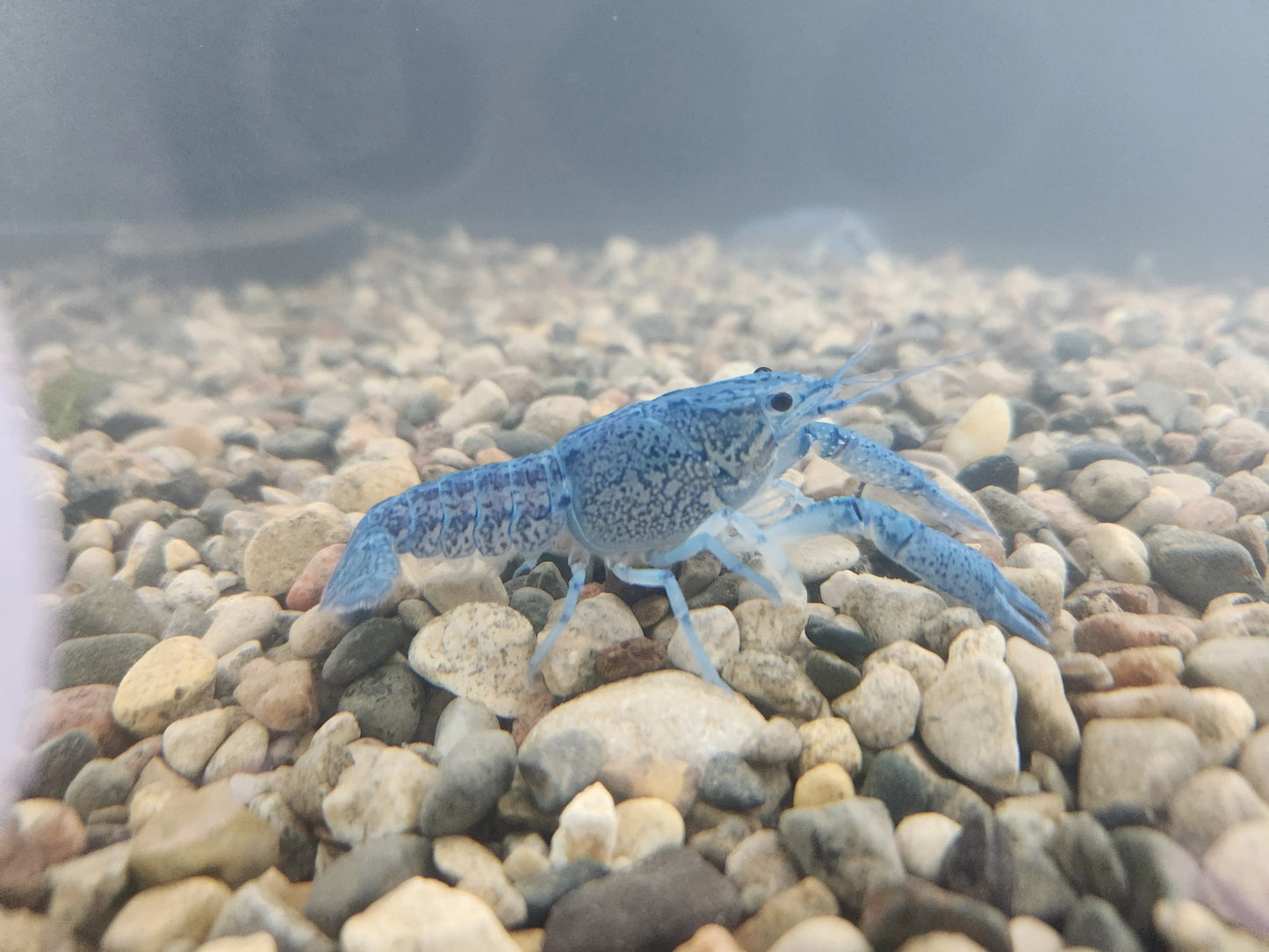
The Electric Blue Crayfish (Procambarus alleni), also known as the Florida Crayfish, is a bold freshwater invertebrate known for its vivid cobalt-blue shell, active personality, and fascinating behavior. Native to Florida, this hardy crayfish adds bright color and movement to larger freshwater aquariums.
Electric Blue Crayfish are highly interactive aquarium residents that explore, dig, climb, and rearrange decor. They are best suited for aquarists who can provide a spacious aquarium, secure lid, hiding places, and carefully chosen tankmates.
Key Features
- Brilliant electric-blue coloration
- Hardy freshwater crayfish from Florida
- Active bottom-dwelling scavenger
- Full of personality and movement
- Best kept singly in most aquariums
- Great for larger specialty freshwater setups
Care Guide
- Scientific Name: Procambarus alleni
- Common Names: Electric Blue Crayfish, Florida Crayfish
- Origin: Florida, United States
- Care Level: Easy to moderate
- Temperament: Semi-aggressive and territorial
- Adult Size: Approximately 4–6 inches including claws
- Minimum Tank Size: 30 gallons or larger recommended per crayfish
- Tank Level: Bottom
- Water Temperature: 70–78°F
- pH Range: 6.5–7.8
- KH Range: Approximately 4–15 dKH
- General Hardness (GH): Moderately hard to hard water is preferred to support shell development and molting
- Diet: Omnivore
Why Choose Electric Blue Crayfish?
Electric Blue Crayfish are a great choice for hobbyists who want a freshwater invertebrate with bold color and a lot of personality. Their bright blue shell makes them stand out instantly against dark substrate, rocks, driftwood, and live plants.
They are hardy and adaptable, but they are not delicate community animals. Electric Blue Crayfish can catch slow fish, nip fins, dig, move decor, and claim territory. They are best for aquariums planned around their behavior.
Important Temperament Note
Electric Blue Crayfish are territorial, especially toward other crayfish. In most aquariums, they are best kept singly unless the tank is very large and has multiple caves, hiding spaces, and separate territories.
They may also grab slow-moving fish or bottom dwellers, especially at night. Choose fast, mid to upper-level tankmates and avoid overcrowding the bottom of the aquarium.
Ideal Tank Setup
Electric Blue Crayfish do best in a stable aquarium with sand or fine gravel for digging, sturdy caves, driftwood, PVC-style hides, and plenty of floor space. Secure heavy rocks and decorations so digging cannot make them collapse. Live rooted plants may be dug up, clipped, or eaten. Hiding places are especially important because crayfish become soft-bodied and vulnerable immediately after molting.
A secure lid is required because crayfish are strong climbers and may escape through openings around filters, cords, or airline tubing. Keep ammonia and nitrite at 0 ppm, provide good filtration and oxygenation, and maintain stable mineral content, including adequate calcium, for healthy shell development. Avoid sudden water-chemistry changes.
Possible Tankmates — Risk Remains
A species-focused aquarium is the safest option. Even fast-moving fish can be caught while resting, so no fish or invertebrate tankmate is guaranteed safe with this opportunistic predator. In a sufficiently large aquarium, some keepers attempt:
- Fast-moving danios
- Active barbs
- Rainbowfish
- Other fast mid to upper-level fish
- Larger peaceful community fish with caution
- Snails may be injured or eaten and are not recommended as reliable tankmates
Tankmates to Avoid
- Corydoras catfish
- Loaches
- Slow bottom-dwelling fish
- Long-finned fish such as bettas or fancy guppies
- Very small nano fish
- Shrimp colonies
- Other crayfish in small aquariums
- Aggressive fish that may injure the crayfish during molting
Diet & Feeding
Electric Blue Crayfish are omnivores and active scavengers. Feed sinking pellets, shrimp pellets, algae wafers, blanched vegetables, frozen bloodworms, brine shrimp, daphnia, and other protein-based or vegetable-based foods.
A varied diet helps support strong color, healthy growth, and successful molting. Make sure food reaches the bottom so the crayfish can feed properly.
Molting and Shell Health
Crayfish shed their outer shells as they grow. A freshly molted crayfish needs a secure hiding place while its new shell hardens. Leave the shed exoskeleton in the aquarium initially; the crayfish may eat it to reclaim minerals. Avoid handling or disturbing a crayfish during this vulnerable period. Maintain appropriate water hardness and a varied diet with mineral sources to support normal molts.
Care Tips
- Keep one crayfish per aquarium in most setups
- Use a 30 gallon or larger aquarium
- Provide caves, rocks, driftwood, and hiding places
- Use a tight-fitting lid to prevent escape
- Avoid slow, long-finned, or bottom-dwelling tankmates
- Feed sinking foods, vegetables, and meaty frozen foods
- Avoid copper-containing fish medications and other treatments unless explicitly confirmed safe for crayfish
- Provide a stable supply of minerals, particularly calcium, for healthy molting
Frequently Asked Questions
How big do Electric Blue Crayfish get?
Electric Blue Crayfish typically reach approximately 4–6 inches as adults, including their claws.
Are Electric Blue Crayfish aggressive?
They are semi-aggressive and territorial, especially toward other crayfish. They are best kept singly in most aquariums.
Can Electric Blue Crayfish live with fish?
Yes, with caution. Choose fast-swimming mid to upper-level fish and avoid slow, long-finned, tiny, or bottom-dwelling tankmates.
What do Electric Blue Crayfish eat?
They eat sinking pellets, shrimp pellets, algae wafers, blanched vegetables, frozen foods, and other meaty or plant-based foods.
Will Electric Blue Crayfish escape?
Yes, they can climb and escape through small openings. A tight-fitting aquarium lid is strongly recommended.
Can Electric Blue Crayfish live with shrimp?
They are not recommended for shrimp tanks. They may catch and eat shrimp, especially smaller shrimp or shrimp that are molting.
Do Electric Blue Crayfish need hiding places?
Yes. Caves, driftwood, rocks, and hiding areas are very important, especially during molting.
Are these available for shipping?
No. Live invertebrates are available for in-store purchase or local pickup only at Tropical Treasures Wyo in Cheyenne, Wyoming.
Available at Tropical Treasures Wyo
Electric Blue Crayfish are bold freshwater invertebrates for larger aquariums, specialty setups, and hobbyists who enjoy unique aquarium animals with personality. Visit Tropical Treasures Wyo in Cheyenne, Wyoming, to shop crayfish, shrimp, snails, freshwater fish, live aquarium plants, fish food, filtration supplies, and aquarium care products. Live livestock is available for in-store purchase or local pickup only.
Important Species and Shopping Notes
Electric Blue Crayfish are invertebrates, not fish. They may catch fish or shrimp, dig, rearrange decor, and escape through gaps; plan a species-focused or carefully selected setup with secure cover and plentiful shelters.
Live fish and live aquatic animals are for in-store purchase or local pickup only at Tropical Treasures Wyo, Cheyenne, Wyoming. No livestock shipping.
Live Aquatic Livestock — In-Store Pickup Only
Live snails and other aquatic animals are not available for shipping. Purchase in-store or arrange local pickup at Tropical Treasures Wyo in Cheyenne, Wyoming only. Please select in-store pickup at checkout.
Live Aquatic Animal Sales Policy: Inspect all livestock before leaving the store. All live aquatic animal sales are final once they leave our store. Ask our team about acclimation and species-specific care.
Explore Related Aquarium Products: