

Duboisi Cichlid (Tropheus duboisi)
Duboisi Cichlid (Tropheus duboisi)
Out of stock
Live fish, shrimp, snails and aquatic plants are not shipped. Visit Tropical Treasures Wyo in Cheyenne, Wyoming or select pickup at checkout.
Couldn't load pickup availability
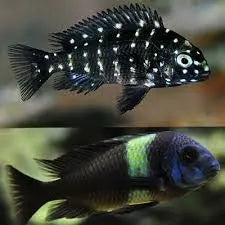
The Duboisi Cichlid (Tropheus duboisi) is one of the most iconic African cichlids from Lake Tanganyika. Juveniles are famous for their black bodies covered in bright white-blue spots, while adults transition to a bold blue head with a yellow or white body band. This dramatic color transformation makes Duboisi one of the most visually fascinating cichlids to keep.
Active, social, and best kept in groups, Duboisi thrive in rock-heavy setups with strong water flow and high oxygenation—important for Tanganyikan aquarists who love personality and movement in their tanks.
Key Features
⚪ Juvenile Spotted Pattern Black body with bright blue/white spots
💙 Adult Blue Face Stunning deep blue head coloration
💛 Signature Mid-Body Band White/yellow horizontal band as they mature
🐠 Active & Social Best kept in groups of 8+
🪨 Rock-Dwelling Tanganyikan Cichlid Loves caves and complex hardscape
⚙️ Care Guide
- Scientific Name: Tropheus duboisi
- Common Names: Duboisi Cichlid, White-Spotted Tropheus
- Origin: Lake Tanganyika, Africa
- Temperament: Semi-aggressive; colony fish
- Adult Size: Approximately 4–5 inches
- Diet: Herbivore spirulina flakes, algae wafers, veggie-based pellets
- Tank Size: 90–125 gallons or larger recommended for planned adult groups
- Temperature: 76–82°F
- pH Range: 8.0–9.0 (hard, alkaline water)
- Water Hardness: High
💡 Tank Setup Tips
- Provide lots of rockwork, caves, and line-of-sight breaks
- Ideal tank: rocky Tanganyikan-style aquascape
- Maintain strong filtration and high oxygen levels
- Keep in groups of 8 or more to distribute aggression
- Avoid mixing with nonTropheus species or slow eaters
- Perfect tankmates: other Tropheus colonies, goby cichlids, shell dwellers (in larger tanks)
❓ FAQ
Q: Do Duboisi Cichlids change color?
A: Yesjuveniles are spotted while adults develop a blue face and a mid-body band.
Q: Are they good for beginners?
A: Better for intermediate hobbyists due to diet and water requirements.
Q: Can I mix Duboisi with Mbuna or Peacocks?
A: NoTropheus and Malawi cichlids should not be mixed.
Q: What diet do they require?
A: A strict herbivore dietavoid high-protein foods to prevent bloat.
Important: Fish names and color varieties may reflect supplier labeling; verify identity and adult compatibility before mixing species. Live fish are available for in-store purchase or local pickup only at Tropical Treasures Wyo in Cheyenne, WY. No livestock shipping.
Species-specific Tanganyika care guidance: Tropheus duboisi typically reaches around 4–5 inches. It is a specialized aufwuchs-grazing cichlid with sensitive digestion: feed a consistent algae/spirulina-rich diet and avoid heavy meaty foods. Tropheus aggression is best managed in planned same-species groups, commonly 10–15 or more in a large established aquarium around 90–125 gallons or larger, with stable hard alkaline water. Avoid describing small mixed collections as safe.
In-Store Pickup Only — Live Fish
Live fish are not available for shipping. Available for in-store purchase or local pickup at Tropical Treasures Wyo in Cheyenne, Wyoming only. Please select in-store pickup at checkout.
Live Fish Sales Policy: Please inspect your fish before leaving the store. All live fish sales are final once they leave our store. We're happy to help with acclimation and care questions.
Explore Related Aquarium Products: