

Assorted Angelfish
Assorted Angelfish
Out of stock
Live fish, shrimp, snails and aquatic plants are not shipped. Visit Tropical Treasures Wyo in Cheyenne, Wyoming or select pickup at checkout.
Couldn't load pickup availability
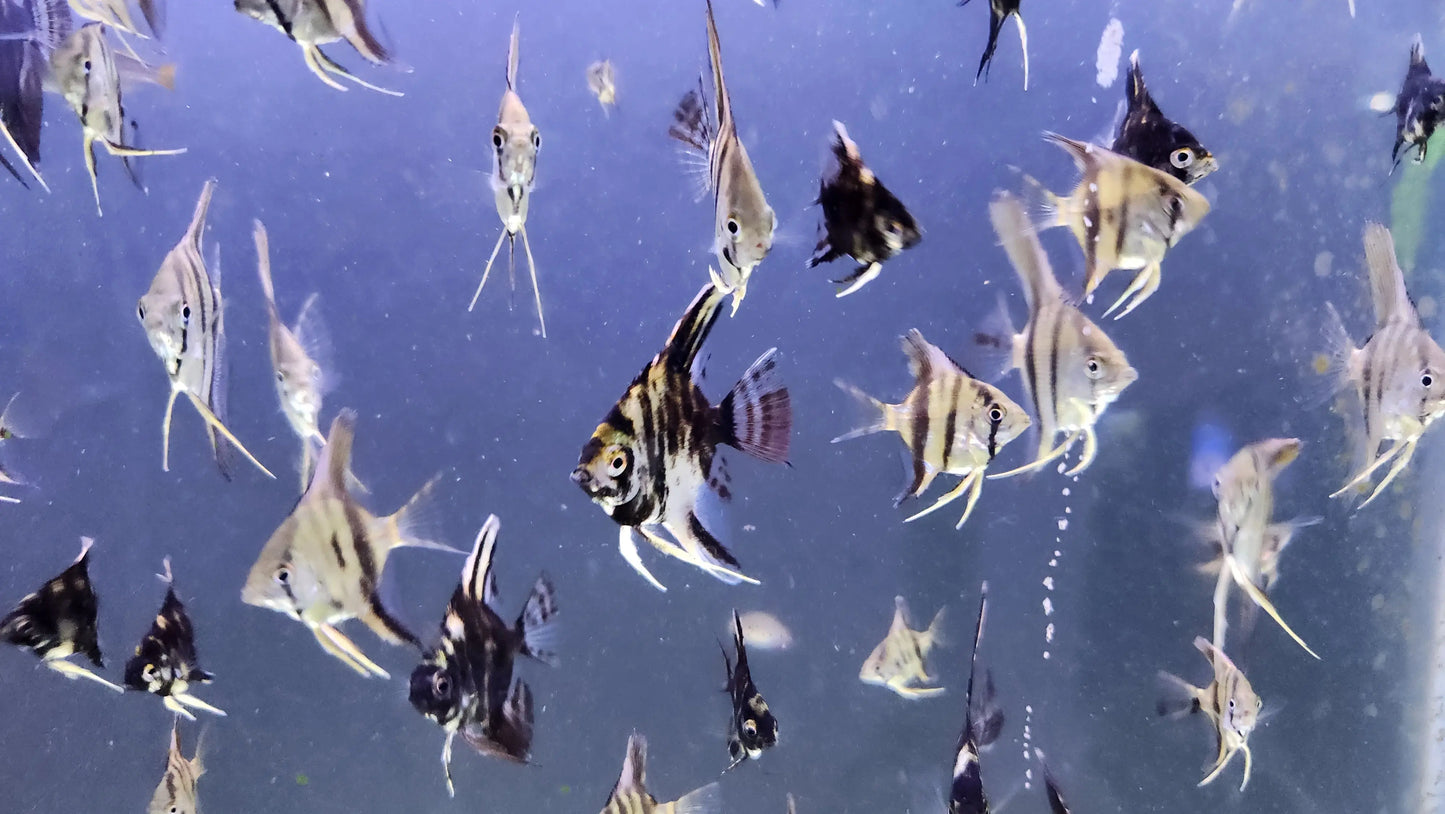
The Assorted Angelfish is a freshwater angelfish (Pterophyllum scalare) known for a changing assortment of colors and patterns, potentially including marble, koi, silver, zebra, and other varieties. Individual colors, markings, and fin shapes can vary. These graceful fish can make a distinctive centerpiece in a properly sized tropical aquarium.
Assorted Angelfish Care
- Scientific name: Pterophyllum scalare (domestic color variety)
- Adult size: Approximately 6 inches long; substantially taller including fins
- Recommended aquarium: 30 gallons or larger for one adult; larger, taller tanks for multiple angelfish
- Water temperature: 76–82°F
- pH: 6.5–7.8; keep water conditions stable
- Temperament: Semi-aggressive as adults; may become territorial when pairing or breeding
- Diet: Omnivore; quality flakes or pellets supplemented with suitable frozen or live foods
- Care level: Moderate
Tank Mates
Keep with peaceful, appropriately sized community fish that share similar water requirements. Avoid fin nippers and tiny fish or shrimp that could be eaten. Monitor compatibility as angelfish mature.
Aquarium Setup
Provide a fully cycled, well-filtered aquarium with vertical swimming space, plants, driftwood, and quiet retreats. Maintain consistent water quality and avoid overcrowding.
Adult Angelfish Compatibility & Aquarium Height
Adult size and space: Domestic Pterophyllum scalare may reach about 6 inches in body length and 8–10 inches or more in overall height including extended fins. A tall, mature aquarium with roughly 18–24 inches of water depth is helpful for adult finnage. A single adult may be maintained in a suitably proportioned 30-gallon aquarium; for several adults, a taller 55-gallon or larger tank with ample floor space and separate visual territories is preferable.
Breeding aggression: Even normally calm angelfish can become strongly territorial when they form pairs or guard eggs and fry. Be ready to rearrange cover or separate an aggressive pair. Avoid keeping them with fin-nipping barbs or very small fish and shrimp that may be eaten as angelfish mature.
Feeding: Supply a varied omnivorous diet of quality cichlid flakes or small pellets and occasional frozen foods. Provide open vertical swimming room alongside tall plants or driftwood for security.
In-Store Availability & Livestock Policy
In-store pickup only — no live fish shipping. Please inspect and select your fish before purchase. All live fish sales are final once they leave the store. Our team can help with aquarium care and troubleshooting questions.
Explore Related Aquarium Products: