
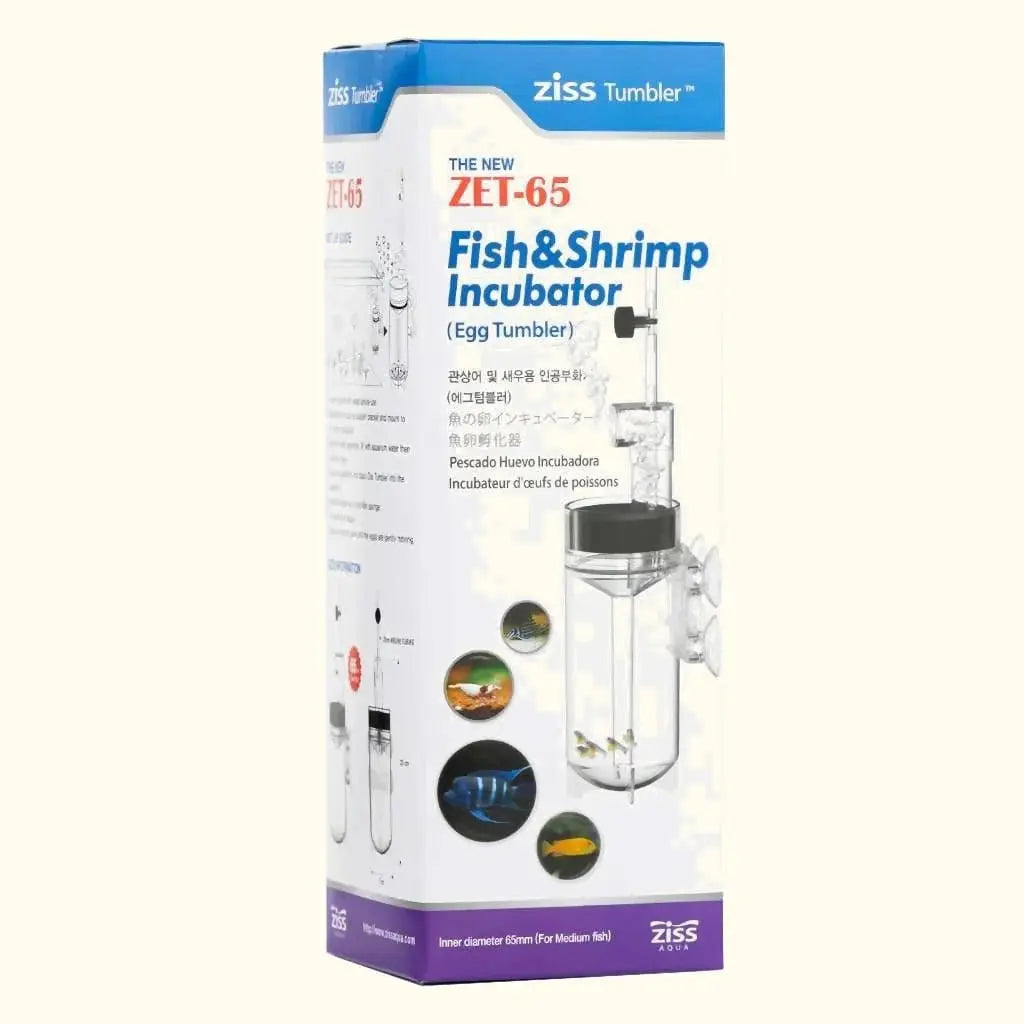
Ziss Egg Tumbler
The Ziss Egg Tumbler is an adjustable aquarium egg incubator designed to help breeders hatch fish eggs in a controlled, oxygen-rich environment. It uses gentle, adjustable water movement to circulate fresh aquarium water around the eggs while keeping them separated from adult fish and other potential predators.
Egg tumblers are especially useful for mouthbrooding African cichlids, but this model may also be used for compatible pleco, Corydoras, and other fish eggs. The airflow can be adjusted for larger or smaller eggs, and eggs that should not actively tumble can be allowed to rest while water continues flowing around them.
Key Features
- Designed to help incubate fish eggs until they hatch
- Adjustable airflow controls egg movement
- Can be used for actively tumbled eggs or stationary eggs
- Helps circulate oxygen-rich aquarium water around the eggs
- Commonly used for African cichlid eggs
- May also be used for pleco and Corydoras eggs
- Clear body makes eggs and developing fry easy to observe
- Attaches inside the aquarium with strong Ziss suction cups
- Removable components make cleaning and inspection easier
- Compact design fits inside many breeding and grow-out aquariums
Product Information
- Brand: Ziss Aqua
- Product Type: Air-driven fish egg incubator
- Approximate Dimensions: 2.95 × 2.76 × 8.66 inches
- Mounting Method: Suction-cup bracket
- Flow Control: Adjustable air valve
- Placement: Inside the aquarium
- Recommended Use: Fish breeding and egg incubation
Best Used For
- African cichlid eggs
- Peacock cichlid eggs
- Mbuna eggs
- Pleco eggs
- Corydoras eggs
- Eggs removed from mouthbrooding fish
- Eggs separated from parents to reduce predation
- Breeding tanks, fish rooms, and hatchery systems
How It Works
An air pump sends air through the tumbler, creating a controlled upward flow of aquarium water. This movement keeps oxygenated water circulating around the eggs and can gently move them in a way that resembles the natural fanning or tumbling provided by parent fish.
The amount of movement should be adjusted to match the species and egg type. Some eggs benefit from gentle tumbling, while sticky or delicate eggs may need to remain mostly stationary with water simply circulating around them.
Setup Instructions
- Rinse all tumbler components with clean water before assembly. Do not use soap or household cleaning chemicals.
- Assemble the tumbler according to the included manufacturer instructions.
- Fill the tumbler with water from the aquarium.
- Carefully place the viable eggs inside the lower chamber.
- Attach the tumbler securely to the inside aquarium wall using the included suction cups.
- Connect standard airline tubing from an aquarium air pump to the tumbler’s air valve.
- Remove trapped air from the sponge and chamber as needed.
- Slowly adjust the air valve until the eggs move gently or water circulates appropriately around them.
Air Pump Requirements
The Ziss Egg Tumbler requires a compatible aquarium air pump and standard airline tubing to operate. These items may be sold separately.
A check valve is also recommended when the air pump is positioned below the aquarium water level. The check valve helps reduce the risk of aquarium water siphoning backward into the air pump during a power outage.
Adjusting the Flow
Start with a low airflow setting and gradually increase it until the desired movement is achieved. Eggs should move gently and should not be thrown forcefully around the chamber.
- Too little flow: Water may not circulate adequately around the eggs.
- Correct flow: Eggs move gently or receive steady circulation without being damaged.
- Too much flow: Eggs may bounce, collide, or move aggressively inside the tumbler.
The correct setting varies by species, egg size, development stage, and whether the eggs are adhesive or non-adhesive.
Monitoring the Eggs
- Check the tumbler several times per day.
- Make sure the air pump and water flow remain consistent.
- Watch for eggs that turn white, cloudy, or develop fuzzy growth.
- Remove clearly infertile or fungused eggs carefully with clean tweezers when practical.
- Do not overcrowd the chamber.
- Keep water quality, temperature, and oxygen levels stable.
The egg tumbler helps create water movement around the eggs, but it does not guarantee that every egg will hatch or prevent all fungal growth. Fertility, water quality, temperature, handling, and species-specific requirements all affect hatch success.
After the Eggs Hatch
Newly hatched fry may remain in the tumbler while they are still absorbing their yolk sacs, depending on the species. Once the fry become free-swimming and are ready to begin feeding, move them to an appropriate breeder box, nursery tank, or protected grow-out aquarium.
Research the breeding requirements of the specific fish species before moving or feeding the fry.
Care and Cleaning
- Disassemble and rinse the tumbler after each breeding cycle.
- Use clean water and a soft aquarium-safe brush when needed.
- Do not use soap, bleach, or household cleaners unless following an aquarium-safe disinfection procedure with thorough neutralization and rinsing.
- Inspect the sponge, air valve, tubing connection, and suction cups regularly.
- Replace worn or damaged parts when needed.
Important Use Notes
- Use only with eggs from species appropriate for artificial incubation.
- Handle eggs gently to avoid physical damage.
- Maintain stable aquarium temperature and water parameters.
- Do not allow the air supply to stop for extended periods.
- Do not use excessive flow.
- Keep the tumbler submerged and securely attached during operation.
Frequently Asked Questions
Does the Ziss Egg Tumbler include an air pump?
No. A compatible aquarium air pump and airline tubing are generally required separately.
Can it be used for African cichlid eggs?
Yes. Mouthbrooding African cichlid eggs are one of the most common uses for this tumbler.
Can it hatch Corydoras eggs?
It may be used for Corydoras eggs, but adhesive eggs may not tumble in the same way as cichlid eggs. The flow should be adjusted so clean aquarium water circulates gently around them.
Can it be used for pleco eggs?
Yes. It is commonly used for compatible pleco eggs after they have been separated from the breeding cave or parent fish.
Should the eggs move constantly?
Not always. The amount of movement depends on the species and egg type. Some eggs should tumble gently, while others should remain mostly still with water flowing around them.
Does an egg tumbler prevent fungus?
It can improve circulation around the eggs, but it cannot guarantee that fungal growth will not occur. Infertile or damaged eggs should still be monitored and removed when possible.
When should the fry be removed?
Fry are generally moved once they are free-swimming and have absorbed their yolk sacs, but timing varies by species.
Available at Tropical Treasures Wyo
Shop the Ziss Egg Tumbler at Tropical Treasures Wyo in Cheyenne, Wyoming, or order eligible aquarium breeding supplies online for shipping.
Explore More Aquarium Products:
Low stock: 1 left
Couldn't load pickup availability
Explore Related Aquarium Products: