
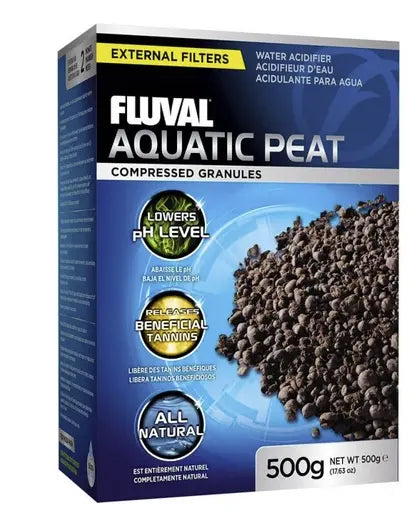
Fluval Aquarientorf – Peat Granules Aquarium Filter Media
Fluval Aquarientorf Peat Granules are a natural freshwater filter media designed to help soften aquarium water and create more acidic conditions for fish and plants that prefer lower pH and reduced carbonate hardness.
Fluval Peat Granules contain naturally occurring humic acids, tannins, and trace elements. When used in aquarium filtration, they gradually influence water chemistry while creating conditions similar to many tropical blackwater and soft-water environments.
Key Features
- Natural peat-based aquarium filter media
- Helps soften freshwater aquarium water
- Helps lower pH naturally
- Reduces carbonate hardness over time
- Releases naturally occurring humic acids and tannins
- Useful for soft-water and acidic-water fish
- Can help create blackwater-style aquarium conditions
- Highly concentrated filtration media
- Suitable for use in canister filters and media chambers
- For freshwater aquariums only
Product Information
- Brand: Fluval
- Product: Aquarientorf / Peat Granules
- Product Type: Natural aquarium filter media
- Water Type: Freshwater Only
- Primary Use: Softening water and creating more acidic conditions
- Filter Placement: Media chamber or fine nylon filter bag
What Does Fluval Peat Do?
Peat naturally releases organic compounds into aquarium water that can influence both hardness and pH.
Fluval recommends Peat Granules for fish that naturally occur in soft, acidic water and for aquariums where tap water is harder or more alkaline than desired.
Potential benefits include:
- Lowering carbonate hardness
- Gradually lowering pH
- Adding humic substances to aquarium water
- Creating more natural conditions for soft-water tropical fish
- Supporting breeding conditions for some species
Ideal for Soft-Water Fish
Fluval Peat Granules can be especially useful for species that naturally inhabit soft, acidic environments.
Examples may include:
- Many tetras
- Rasboras
- Apistogramma
- Discus
- Angelfish
- Some Corydoras
- South American dwarf cichlids
- Many blackwater aquarium species
Blackwater Aquarium Use
Peat can contribute natural tannins and humic substances to aquarium water, sometimes creating a light amber or tea-colored appearance.
This coloration is normal and may be desirable in blackwater-style aquariums.
The effect can resemble natural habitats containing:
- Leaf litter
- Driftwood
- Peat-rich soils
- Decaying botanical material
How to Use
- Rinse the peat granules before use to remove fine dust created during handling.
- Place the media into an appropriate filter chamber or nylon filter bag.
- When used in a Fluval canister filter, place the peat inside a nylon media bag.
- Position the media where aquarium water will flow through it consistently.
- Monitor pH and KH regularly while the peat is in use.
Monitor pH and KH
Peat can gradually change aquarium water chemistry, so regular testing is important.
Fluval recommends monitoring both pH and carbonate hardness (KH) to make sure the desired water conditions are being maintained.
Fluval's current media instructions indicate that approximately 3–5 dKH is commonly suitable for fish that thrive in soft, acidic water.
How Long Does Peat Last?
The effectiveness of peat granules gradually decreases as the media becomes exhausted.
There is no single replacement interval that works for every aquarium because performance depends on:
- Starting water hardness
- Carbonate hardness
- Desired pH
- Amount of media used
- Aquarium volume
- Water-change frequency
Replace the peat when testing shows that it is no longer maintaining the desired water conditions.
Important Water Chemistry Note
Peat should not be used simply to chase a specific pH number.
The safest approach is to make changes gradually and monitor both pH and KH. Rapid or uncontrolled changes in water chemistry can stress aquarium livestock.
Not Recommended for Every Aquarium
Fluval Peat Granules are specifically intended for aquariums containing species that benefit from softer, more acidic water.
They may not be appropriate for:
- African Rift Lake cichlids
- Many livebearers
- Fish requiring hard, alkaline water
- Aquariums where a high KH and stable alkaline pH are desired
- Marine aquariums
Freshwater Use Only
Fluval Peat Granules are intended for freshwater aquariums only.
They should not be used as filtration media in marine or reef aquariums.
Frequently Asked Questions
What is Fluval Aquarientorf?
Aquarientorf is Fluval peat filter media, commonly sold in English-speaking markets as Fluval Peat Granules.
What does peat do in an aquarium?
Peat naturally helps soften water, reduce carbonate hardness, lower pH, and introduce humic substances and tannins.
Does Fluval Peat lower pH?
Yes. It can gradually help create more acidic water conditions, particularly when the starting KH is not excessively high.
Will it turn the water brown?
It may add an amber or tea-colored tint from natural tannins. This is normal and is often desirable in blackwater aquariums.
Should I rinse it first?
Yes. Fluval recommends rinsing the granules before use to remove fine dust.
Can I put it directly into a canister filter?
When used in a Fluval canister filter, the peat granules should be contained inside a nylon filter bag.
Is it safe for African cichlids?
It is generally not appropriate for Rift Lake African cichlids because they typically require hard, alkaline water rather than the soft, acidic conditions peat promotes.
Can I use it in saltwater?
No. Fluval specifies that Peat Granules are for freshwater use only.
Available at Tropical Treasures Wyo
Fluval Aquarientorf Peat Granules are available at Tropical Treasures Wyo in Cheyenne, Wyoming, when in stock.
Eligible dry goods are available for shipping.
Explore More Aquarium Products:
Low stock: 2 left
Couldn't load pickup availability
Explore Related Aquarium Products: