
Florida Flagfish – Jordanella floridae
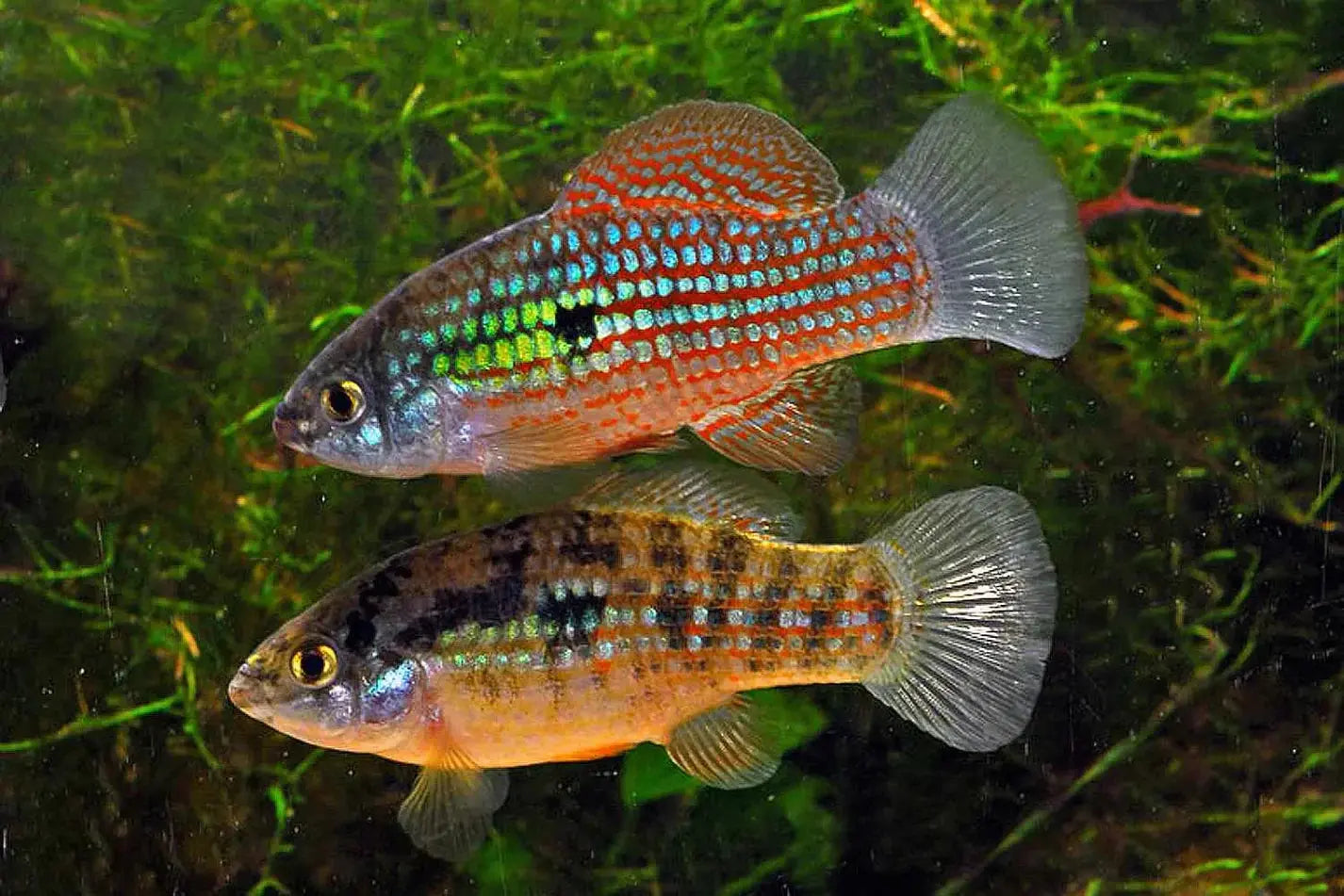
The Florida Flagfish (Jordanella floridae) is a hardy native North American freshwater fish known for its bold red, blue, green, and iridescent markings. Named for its flag-like coloration, this unique species adds personality, color, and natural algae-grazing behavior to freshwater aquariums.
Florida Flagfish are especially valued by planted tank keepers for their ability to graze on hair algae and filamentous algae. They are active, adaptable fish that do best in properly sized aquariums with robust tankmates, plants, decor, and a balanced diet.
Key Features
- Native U.S. freshwater fish
- Bold red, blue, green, and iridescent markings
- Known for grazing on hair and filamentous algae
- Hardy and adaptable aquarium fish
- Great for planted tanks with proper feeding
- Best with active, appropriately sized tankmates
Care Guide
- Scientific Name: Jordanella floridae
- Common Name: Florida Flagfish
- Origin: Florida, United States
- Care Level: Easy to moderate
- Temperament: Semi-aggressive; can be territorial
- Adult Size: Approximately 2–2.5 inches
- Minimum Tank Size: 20 gallons or larger recommended
- Tank Level: Mid to lower levels
- Water Temperature: 64–82°F
- pH Range: 6.5–8.0
- Hardness: Soft to hard
- Diet: Omnivore with strong algae-grazing behavior
Why Choose Florida Flagfish?
Florida Flagfish are a great choice for aquarists who want a hardy, colorful fish with useful algae-grazing habits. Their unique native U.S. origin and flag-like coloration make them different from many common community fish.
They are especially popular in planted aquariums where hair algae is a concern. While they can help graze algae, they should not be relied on as the only algae-control method. Good lighting balance, proper nutrients, regular maintenance, and supplemental feeding are still important.
Temperament Note
Florida Flagfish can be territorial, especially males. They are not as calm as many small tetras or rasboras, so tankmate selection matters. Keeping them in a properly sized aquarium with plants, decor, and broken lines of sight can help reduce chasing.
When keeping multiple Florida Flagfish, a group with more females than males is often recommended to help reduce aggression and stress.
Ideal Tank Setup
Florida Flagfish do best in a stable aquarium with open swimming space, plants, algae growth, driftwood, rocks, and decor. Plants and hardscape help break lines of sight and provide structure for more natural behavior.
They can work well in planted tanks, but they may nibble soft or delicate plants, especially if underfed. Supplementing their diet with algae wafers, vegetable-based foods, and blanched vegetables can help support healthy grazing behavior.
Compatible Tankmates
- Peaceful barbs of similar size
- Danios
- Rainbowfish
- Active livebearers
- Corydoras catfish
- Hillstream loaches with compatible conditions
- Other active community fish with similar water needs
- Snails with caution
Tankmates to Avoid
- Very slow-moving fish
- Long-finned fish such as bettas or fancy guppies
- Very tiny nano fish
- Aggressive cichlids
- Large predatory fish
- Shrimp colonies, especially if breeding shrimp is the goal
Diet & Feeding
Florida Flagfish are omnivores and natural grazers. They may eat hair algae, filamentous algae, biofilm, flakes, pellets, algae wafers, frozen foods, and vegetable-based foods.
Offer a varied diet that includes quality flakes or pellets, algae wafers, frozen foods, and blanched vegetables such as zucchini or spinach. Keeping them well fed can help reduce plant nibbling and support healthy color.
Care Tips
- Keep in a 20 gallon or larger aquarium
- Provide plants and decor to break lines of sight
- Keep more females than males when possible
- Avoid very slow or long-finned tankmates
- Supplement with algae wafers and vegetable-based foods
- Maintain clean, stable water conditions
Frequently Asked Questions
Are Florida Flagfish good algae eaters?
Yes. Florida Flagfish are known for grazing on hair algae and filamentous algae, making them useful in planted aquariums. They should still be fed a balanced diet.
Are Florida Flagfish aggressive?
They can be mildly territorial, especially males. Proper tank size, cover, and group ratios help reduce aggression.
Are Florida Flagfish beginner-friendly?
Yes, they are hardy and adaptable, but their semi-aggressive behavior means tankmate selection should be planned carefully.
Can Florida Flagfish live in planted tanks?
Yes. They can do well in planted aquariums, but they may nibble soft plants if underfed or if algae is limited.
Are Florida Flagfish shrimp-safe?
They are not recommended for shrimp breeding tanks. They may prey on small shrimp or baby shrimp.
What do Florida Flagfish eat?
They eat algae, flakes, pellets, algae wafers, frozen foods, and vegetable-based foods. A varied diet is best.
Are these fish available for shipping?
No. Live fish are available for in-store purchase or local pickup only at Tropical Treasures Wyo in Cheyenne, Wyoming.
Available at Tropical Treasures Wyo
Florida Flagfish are hardy native freshwater fish for planted aquariums, algae-grazing setups, and active community tanks with suitable tankmates. Visit Tropical Treasures Wyo in Cheyenne, Wyoming, to shop freshwater fish, algae eaters, schooling fish, shrimp, snails, live aquarium plants, fish food, filtration supplies, and aquarium care products. Live livestock is available for in-store purchase or local pickup only.
Explore More Aquarium Products:
Low stock: 2 left
Couldn't load pickup availability
Explore Related Aquarium Products: