
Elephant Ear Blue Guppy – Poecilia reticulata
Elephant Ear Blue Guppy – Poecilia reticulata
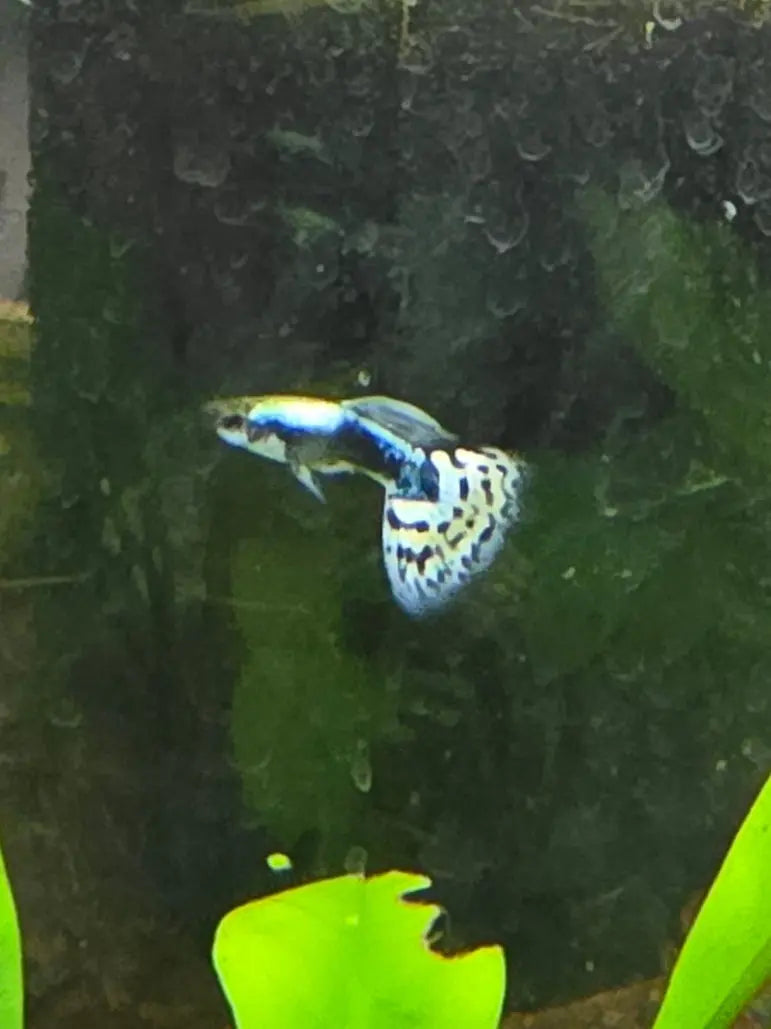
The Elephant Ear Blue Guppy (Poecilia reticulata) is a striking fancy guppy variety known for its beautiful blue coloration and unusually large, flowing pectoral fins that resemble elephant ears.
This selectively bred guppy combines the active, peaceful nature of a traditional guppy with a highly decorative appearance. Its oversized pectoral fins create graceful movement in the aquarium and make it especially eye-catching in planted community tanks.
Key Features
- Beautiful blue coloration
- Large decorative “Elephant Ear” pectoral fins
- Peaceful freshwater community fish
- Active and easy to observe
- Excellent for planted aquariums
- Livebearer species
- Prefers moderately hard to hard, mineral-rich water
- Selective breeding may produce variation in color and fin shape
Fish Information
- Common Name: Elephant Ear Blue Guppy
- Scientific Name: Poecilia reticulata
- Family: Poeciliidae
- Variety: Selectively bred Elephant Ear / Dumbo Blue strain
- Water Type: Freshwater
- Temperament: Peaceful
- Adult Size: Approximately 1.5–2.5 inches depending on sex and strain
- Swimming Level: Middle to upper levels
- Diet: Omnivore
- Care Level: Beginner to Intermediate
Color and Appearance
Elephant Ear Blue Guppies are bred for cool blue, metallic blue, turquoise, or blue-gray coloration combined with oversized pectoral fins.
The enlarged pectoral fins may be solid blue, dark blue, black-edged, or patterned depending on the breeding line.
Exact body color, tail pattern, fin size, and intensity may vary between individual fish.
What Does “Elephant Ear” Mean?
The term Elephant Ear, sometimes called Dumbo Ear, refers to unusually large pectoral fins located directly behind the gill covers.
These fins are selectively bred for size and coloration and give the fish its distinctive flowing appearance.
Recommended Aquarium Size
A 10-gallon aquarium or larger can accommodate a small group, but a 20-gallon aquarium or larger is preferred for better swimming room, water stability, and group management.
Recommended Water Parameters
- Temperature: Approximately 72–80°F
- pH: Approximately 7.0–8.5
- Water Hardness: Moderately hard to hard
- Ammonia: 0 ppm
- Nitrite: 0 ppm
- Nitrate: Kept low through routine maintenance
Guppies generally perform best in stable, mineral-rich freshwater rather than very soft or strongly acidic conditions.
Aquarium Setup
- Use a fully cycled freshwater aquarium
- Provide reliable filtration
- Maintain good oxygenation
- Use gentle to moderate water movement
- Add live or artificial plants for cover
- Leave open swimming areas
- Use a secure aquarium lid
- Perform routine partial water changes
Because Elephant Ear Guppies have enlarged fins, excessively strong current may make swimming more difficult. Moderate flow is usually preferable.
Feeding
Elephant Ear Blue Guppies are omnivores and benefit from a varied diet of appropriately sized foods.
- High-quality tropical flakes
- Micro pellets
- Spirulina-based foods
- Frozen brine shrimp
- Baby brine shrimp
- Frozen daphnia
- Bloodworms as an occasional supplemental food
Feed small portions once or twice daily and avoid overfeeding.
Temperament
Elephant Ear Blue Guppies are generally peaceful and suitable for community aquariums.
Males may display and chase one another, but serious aggression is uncommon when sufficient swimming space and cover are available.
Their oversized fins can make them vulnerable to aggressive or persistent fin-nipping fish.
Compatible Tankmates
Good tankmates may include:
- Other peaceful guppies
- Platies
- Mollies
- Peaceful rasboras
- Corydoras
- Small rainbowfish
- Peaceful tetras that tolerate similar water conditions
- Other gentle community fish
Avoid aggressive species and persistent fin nippers that may damage the large pectoral fins or tail.
Male and Female Differences
Males are usually smaller, more colorful, and have larger decorative fins.
Females are generally larger and fuller-bodied with less intense coloration.
Mature males also have a narrow, pointed reproductive anal fin called a gonopodium.
Breeding
Guppies are livebearers, meaning females give birth to free-swimming fry instead of laying eggs.
When males and females are housed together, breeding can occur readily. Females may also store sperm and produce multiple broods after mating.
Selective pairing is necessary if the goal is to maintain strong Elephant Ear fin development and consistent blue coloration in future generations.
Male-to-Female Ratio
When maintaining mixed-sex groups, a ratio of approximately one male to two or three females can help reduce persistent male attention toward individual females.
Male-only groups are also popular and prevent unwanted fry.
Plants and Aquascaping
Elephant Ear Blue Guppies look especially attractive in planted aquariums.
Suitable plants include:
- Java moss
- Guppy grass
- Anubias
- Java fern
- Cryptocoryne
- Vallisneria
- Floating plants
Plants provide shelter, visual contrast, and additional cover for fry if breeding occurs.
Important Care Notes
- Maintain stable, mineral-rich freshwater.
- Keep ammonia and nitrite at 0 ppm.
- Avoid very strong water flow.
- Choose peaceful tankmates that will not nip fins.
- Feed a varied diet.
- Use a secure aquarium lid.
- Inspect the oversized pectoral fins regularly for damage.
- Never release aquarium fish into local waterways.
Frequently Asked Questions
What is an Elephant Ear Guppy?
It is a selectively bred guppy with unusually large pectoral fins that resemble elephant ears. The trait is also commonly called Dumbo Ear.
How large do Elephant Ear Blue Guppies get?
Most adults reach approximately 1.5–2.5 inches, depending on sex and breeding line.
Are Elephant Ear Blue Guppies peaceful?
Yes. They are generally peaceful community fish.
Do the large fins make them harder to care for?
Their care is similar to other fancy guppies, but gentle to moderate water flow and peaceful tankmates are especially important because the enlarged fins can be more easily damaged.
Can I keep only males?
Yes. Male-only guppy aquariums are popular for displaying colorful strains without producing fry.
Can they live with other guppy varieties?
Yes. Different guppy strains can generally live together when their water and space requirements are compatible.
Will every Elephant Ear Blue Guppy look the same?
No. Blue coloration, pectoral fin size, tail shape, and markings can vary among individuals.
Do they need aquarium salt?
Routine aquarium salt is not required. Stable, moderately hard to hard, mineral-rich freshwater is more important for long-term guppy health.
Available at Tropical Treasures Wyo
Elephant Ear Blue Guppies are available at Tropical Treasures Wyo in Cheyenne, Wyoming, when in stock.
Live fish are available for in-store purchase or local pickup only and are not available for shipping.
Low stock: 10 left
Couldn't load pickup availability
Explore Related Aquarium Products: