
Assorted Platy – Xiphophorus maculatus
Assorted Platy – Xiphophorus maculatus
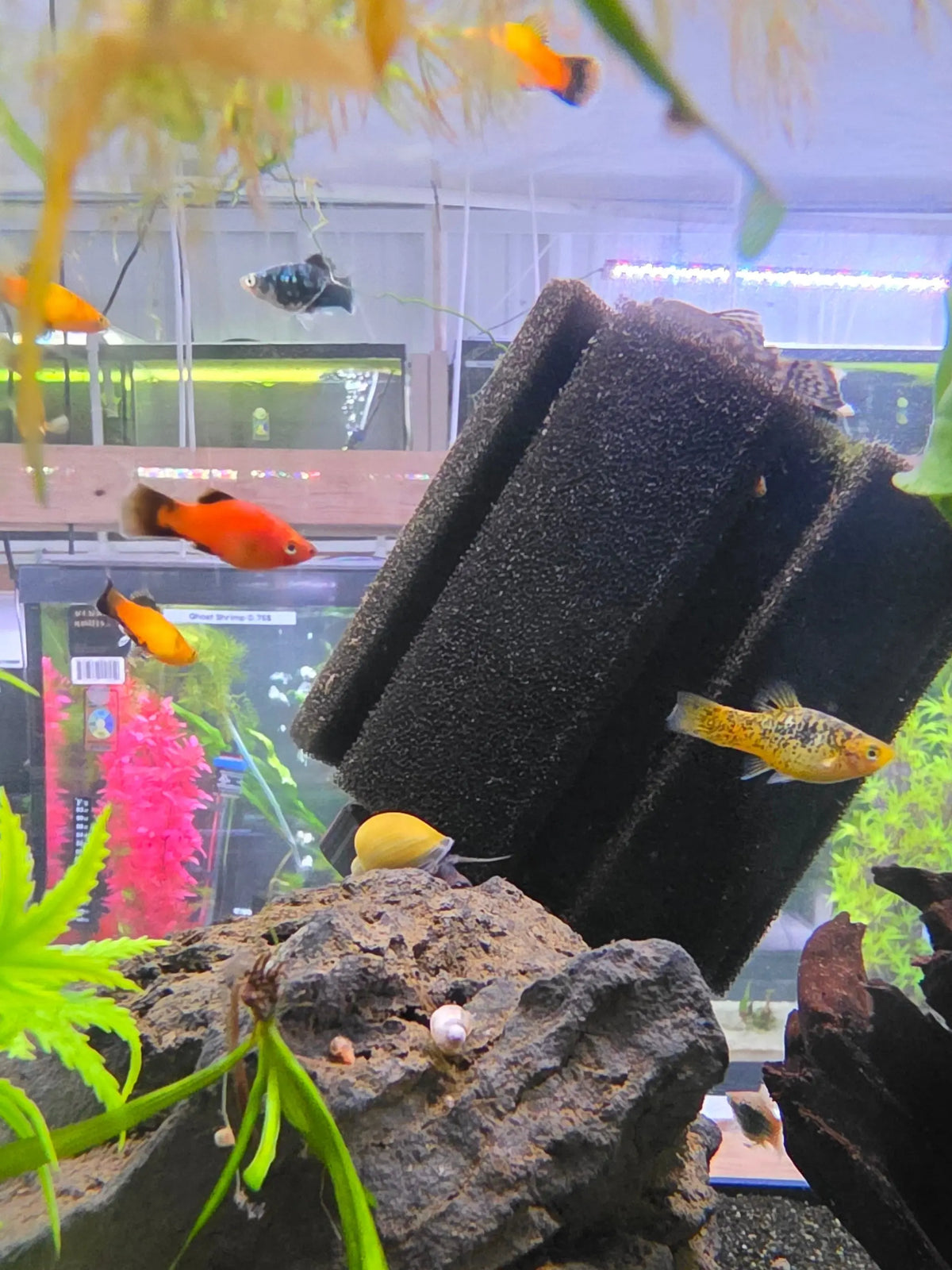
The Assorted Platy (Xiphophorus maculatus) is a colorful freshwater livebearer available in a variety of selectively bred colors and patterns. Assorted shipments may include red, orange, yellow, blue, black, wagtail, calico, tuxedo, or mixed-pattern individuals.
Platies are peaceful, active, and relatively easy to care for, making them an excellent choice for beginner and community aquariums. They do especially well in moderately hard to hard, mineral-rich freshwater.
Key Features
- Available in assorted colors and patterns
- Peaceful freshwater livebearer
- Excellent community aquarium fish
- Active and easy to observe
- Good choice for beginner aquarists
- Prefers moderately hard to hard water
- Omnivorous and easy to feed
- Can reproduce readily in the aquarium
Fish Information
- Common Name: Assorted Platy
- Scientific Name: Xiphophorus maculatus
- Family: Poeciliidae
- Water Type: Freshwater
- Temperament: Peaceful
- Adult Size: Approximately 1.5–2.5 inches
- Swimming Level: Middle to upper levels
- Diet: Omnivore
- Care Level: Beginner
Color and Appearance
Assorted Platies may display many different colors and patterns depending on the shipment.
Common varieties may include:
- Red
- Orange
- Yellow
- Blue
- Black
- Wagtail
- Calico
- Tuxedo
- Mixed and multicolor patterns
Exact coloration and pattern will vary by individual fish.
Adult Size
Platies remain relatively small. FishBase reports a maximum total length of approximately 4 cm for males and 6 cm for females. :contentReference[oaicite:1]{index=1}
Recommended Aquarium Size
A 10-gallon aquarium can accommodate a small group, but a 20-gallon aquarium or larger is preferable for better swimming room, water stability, and management of potential fry.
Recommended Water Parameters
- Temperature: Approximately 70–78°F
- pH: Approximately 7.0–8.0
- Water Hardness: Moderately hard to hard
- Ammonia: 0 ppm
- Nitrite: 0 ppm
- Nitrate: Kept low through routine maintenance
FishBase lists the species at approximately pH 7.0–8.0 and 9–19 dH. :contentReference[oaicite:2]{index=2}
Aquarium Setup
- Use a fully cycled freshwater aquarium
- Provide reliable biological filtration
- Maintain good surface agitation and oxygenation
- Add live or artificial plants for shelter
- Leave open swimming areas
- Use a secure aquarium lid
- Perform regular partial water changes
Feeding
Assorted Platies are omnivores and accept a wide variety of aquarium foods.
- Quality tropical flakes
- Small pellets
- Spirulina or algae-based foods
- Frozen brine shrimp
- Frozen daphnia
- Bloodworms as an occasional supplemental food
- Soft vegetable matter
FishBase reports that wild platies feed on worms, crustaceans, insects, and plant matter, so a varied aquarium diet is appropriate. :contentReference[oaicite:3]{index=3}
Temperament
Platies are generally peaceful and work very well in community aquariums.
They are social but do not need to school tightly. Keeping several together usually produces more natural activity and behavior.
Compatible Tankmates
- Other platies
- Guppies
- Mollies
- Swordtails
- Peaceful rainbowfish
- Corydoras
- Peaceful rasboras
- Hard-water tolerant tetras
- Other peaceful community fish
Avoid highly aggressive fish or species large enough to eat them.
Male vs. Female
Males have a narrow, pointed reproductive anal fin called a gonopodium.
Females have a broader, fan-shaped anal fin and generally grow somewhat larger and fuller-bodied.
Male-to-Female Ratio
If keeping mixed sexes, a ratio of approximately one male to two or three females can help reduce persistent male attention toward individual females.
Male-only or female-only groups may also be maintained if breeding is not desired.
Breeding
Platies are livebearers, meaning females give birth to free-swimming fry instead of laying eggs.
They reproduce readily in aquariums. FishBase notes a gestation period of approximately 24–30 days, with reported broods of about 20–80 young. :contentReference[oaicite:4]{index=4}
Females may store sperm and can produce additional broods after mating.
Protecting Fry
If fry survival is desired, provide plenty of dense cover such as:
- Java moss
- Guppy grass
- Floating plants
- Water sprite
- Fine-leaved stem plants
Adult fish may eat newborn fry when sufficient cover is not available.
Plants and Aquascaping
Assorted Platies work especially well in planted community aquariums.
Suitable plants include:
- Anubias
- Java fern
- Cryptocoryne
- Amazon swords
- Vallisneria
- Java moss
- Floating plants
Do Platies Need Aquarium Salt?
No. Routine aquarium salt is not required for healthy platies.
Stable, moderately hard to hard, mineral-rich freshwater is generally more important for long-term care.
Important Care Notes
- Keep in a fully cycled aquarium.
- Maintain ammonia and nitrite at 0 ppm.
- Provide moderately hard to hard water when possible.
- Feed a varied diet.
- Plan for rapid reproduction if keeping males and females together.
- Provide plants or cover if fry survival is desired.
- Never release aquarium fish into local waterways.
Frequently Asked Questions
What colors come in an Assorted Platy shipment?
Colors vary by shipment and may include red, orange, yellow, black, blue, wagtail, calico, tuxedo, and mixed patterns.
How large do Assorted Platies get?
Most adults remain around 1.5–2.5 inches, with females generally becoming larger than males.
Are Platies peaceful?
Yes. They are generally peaceful and make excellent community aquarium fish.
Are Platies good beginner fish?
Yes. They are hardy, adaptable, and easy to feed when kept in a properly cycled aquarium with suitable water conditions.
Can different Platy colors live together?
Yes. Different color varieties have the same general care requirements and can be maintained together.
Do Platies give birth to live babies?
Yes. They are livebearers and can reproduce readily when males and females are housed together.
Do Platies need aquarium salt?
No. Aquarium salt is not required for routine care. Mineral-rich freshwater is generally sufficient.
Available at Tropical Treasures Wyo
Assorted Platies are available at Tropical Treasures Wyo in Cheyenne, Wyoming, when in stock.
Live fish are available for in-store purchase or local pickup only and are not available for shipping.
Out of stock
Couldn't load pickup availability
Explore Related Aquarium Products: