
African Cichlid | Venustus Live Freshwater Fish
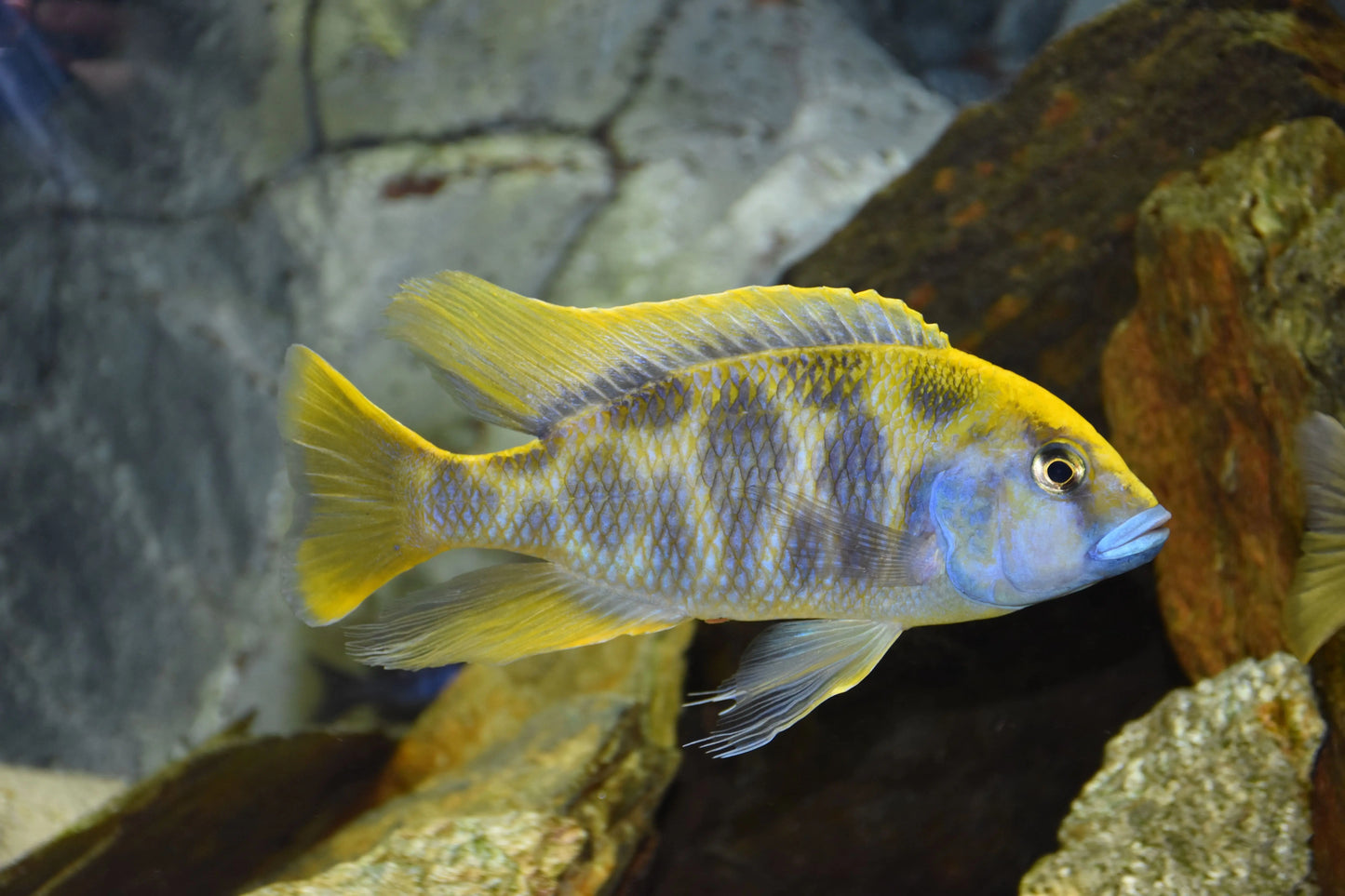
The Venustus African Cichlid (Nimbochromis venustus) is a large, predatory Lake Malawi cichlid prized for its golden-yellow base color covered in dark leopard-like spots. Famous for its unique ambush hunting behavior, the Venustus will often lie on its side pretending to be dead before striking prey—making it one of the most fascinating African cichlids to observe.
This species is best kept in large, well-structured African cichlid aquariums with plenty of swimming space, rockwork, and compatible tankmates. With proper care, Venustus cichlids become bold, intelligent centerpiece fish.
Key Characteristics
Iconic spotted giraffe pattern
Intelligent ambush predator behavior
Bold centerpiece fish
Hardy once established
Long-lived African cichlid species
Care Requirements
- Difficulty: Moderate
- Temperament: Semi-aggressive to aggressive
- Adult Size: 8–10 inches
- Tank Size: 75 gallons minimum (125+ recommended for adults)
- Temperature: 76–82°F
- pH: 7.8–8.6
- Diet: Carnivore (high-quality cichlid pellets, frozen foods)
⚠️ Not suitable for small community fish.
Tank Compatibility
Good Tankmates:
- Other large Malawi cichlids
- Haps & Peacocks of similar size
- Synodontis catfish
Avoid:
- Mbuna (often too aggressive)
- Small or peaceful fish
- Overstocked tanks
Ideal For
- Large African cichlid aquariums
- Lake Malawi biotope setups
- Experienced cichlid keepers
- Aquarists seeking a dramatic centerpiece fish
Product Details
- Common Name: Venustus Cichlid
- Scientific Name: Nimbochromis venustus
- Origin: Lake Malawi, Africa
- Aquarium Type: Freshwater
- Diet: Carnivore
- Temperament: Semi-aggressive
FAQs Venustus African Cichlid
Q: How big do Venustus cichlids get?
A: They typically reach 8–10 inches as adults.
Q: Can Venustus live with Mbuna?
A: Generally not recommended due to aggression and different habitat needs.
Q: Are Venustus cichlids aggressive?
A: They are semi-aggressive and predatory; tankmate selection is important.
Q: Do they need sand or rock substrate?
A: Sand with rock structures works best to mimic their natural habitat.
Q: Are they beginner-friendly?
A: Best for aquarists with prior African cichlid experience.
Explore More Aquarium Products:
Low stock: 2 left
Couldn't load pickup availability
Explore Related Aquarium Products: