
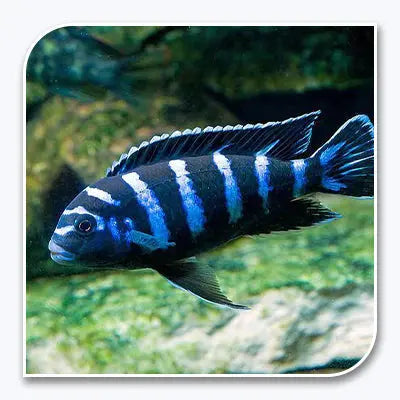
Demasoni Cichlid (Pseudotropheus demasoni)
The Demasoni African Cichlid, scientifically known as Pseudotropheus demasoni, is one of the most iconic mbuna cichlids from Lake Malawi. It is instantly recognizable by its bold electric-blue body with crisp black vertical striping, a pattern that remains vivid throughout its life.
Demasoni cichlids are highly active and territorial, making them best suited for species-dominant or mbuna-only aquariums. When kept properlyin larger groups with ample rockworktheir aggression is spread out, resulting in healthier fish and stunning group displays.
Key Characteristics
Intense blue & black vertical striping
Classic Lake Malawi mbuna
Extremely active and alert
Best kept in groups
Stunning rock-dwelling cichlid
Care Requirements
- Difficulty: Moderate
- Temperament: Aggressive / Territorial
- Adult Size: 3-4 inches
- Tank Size: 55 gallons or larger
- Temperature: 76-82°F
- pH: 7.8-8.6
- Diet: Herbivore / Aufwuchs grazer (spirulina flakes, veggie-based pellets)
🪨 Heavy rockwork with caves and hiding spots is essential.
🥬 Avoid high-protein foods to prevent bloat.
Tank Compatibility
Best Kept With:
- Other mbuna with similar aggression
- Species-only Demasoni groups (recommended)
Avoid:
- Peaceful or slow-moving fish
- Mixed African cichlids with different diets
- Overcrowded or under-rocked tanks
👥 Group Size Tip: Keep 8-12+ individuals to reduce aggression.
Ideal For
- Lake Malawi mbuna aquariums
- Rockscape-heavy cichlid tanks
- Experienced African cichlid keepers
- Aquarists wanting bold color & activity
Product Details
- Common Name: Demasoni African Cichlid
- Scientific Name: Pseudotropheus demasoni
- Origin: Lake Malawi, Africa
- Aquarium Type: Freshwater
- Diet: Herbivore
- Temperament: Aggressive / Territorial
FAQs Demasoni African Cichlid
Q: Are Demasoni cichlids aggressive?
A: Yes. They are very territorial and should be kept in groups to reduce aggression.
Q: Can I keep just one Demasoni?
A: No. Single individuals often become overly aggressive or stressed.
Q: What do they eat?
A: Herbivore dietsspirulina-based flakes and pellets are ideal.
Q: Are they good for community tanks?
A: No. They are best in mbuna-only or species-focused setups.
Q: Do they need sand or gravel?
A: Sand or fine gravel paired with heavy rockwork works best.
Explore More Aquarium Products:
Low stock: 1 left
Couldn't load pickup availability
Explore Related Aquarium Products: