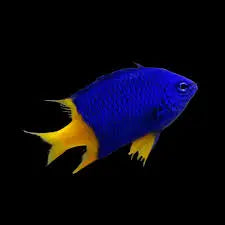
Damsel | Yellowtail Blue Damsel (Chrysiptera parasema)
The Yellowtail Blue Damsel, scientifically known as Chrysiptera parasema, is one of the most popular and recognizable saltwater aquarium fish. Known for its electric blue body and bright yellow tail, this species adds instant color and movement to marine aquariums.
Highly hardy and adaptable, Yellowtail Blue Damsels are often recommended for new saltwater setups and cycling tanks. While generally less aggressive than many other damsels, they can become territorial as they matureespecially in smaller aquariums.
Key Characteristics
Brilliant blue body with bright yellow tail
Extremely hardy saltwater fish
Great beginner marine species
Active swimmer with bold personality
Reef-safe with caution
Care Requirements
- Care Level: Easy
- Temperament: Semi-aggressive
- Adult Size: ~2.53 inches
- Tank Size: 20 gallons minimum
- Temperature: 7480°F
- pH: 8.18.4
- Salinity: 1.0231.025
- Diet: Omnivore (pellets, flakes, frozen foods)
🐟 Best added after more peaceful fish in community reef tanks.
Tank Setup Recommendations
- Live rock with caves and territories
- Moderate water flow
- Secure lid (active swimmer)
- Stable reef parameters
💡 Adding damsels last helps reduce territorial behavior.
Tank Compatibility
Good Tankmates:
- Other semi-aggressive marine fish
- Tangs (larger tanks)
- Wrasses
- Clownfish (with space)
Avoid:
- Very timid fish in small tanks
- Multiple damsels in tight spaces
⚠️ Territorial behavior increases in small aquariums.
Reef Compatibility
Reef-safe
Will not harm corals
May harass very small shrimp in tight spaces
Ideal For
- Beginner saltwater aquariums
- Reef tanks
- Cycling new marine systems
- Aquarists wanting bold color & activity
Product Details
- Common Name: Yellowtail Blue Damsel
- Scientific Name: Chrysiptera parasema
- Origin: Indo-Pacific
- Aquarium Type: Saltwater / Reef
- Diet: Omnivore
- Temperament: Semi-aggressive
FAQs Yellowtail Blue Damsel
Q: Are Yellowtail Blue Damsels aggressive?
A: Mildly compared to other damsels, but still territorial as adults.
Q: Are they good for beginners?
A: Yesone of the hardiest saltwater fish available.
Q: Can they live in reef tanks?
A: Yes. They are reef-safe.
Q: Should they be added first or last?
A: Last, to reduce aggression toward new tankmates.
Q: Do they do well alone?
A: Yes. They are often kept singly.
Explore More Aquarium Products:
Out of stock
Couldn't load pickup availability