
Scissortail Rasbora
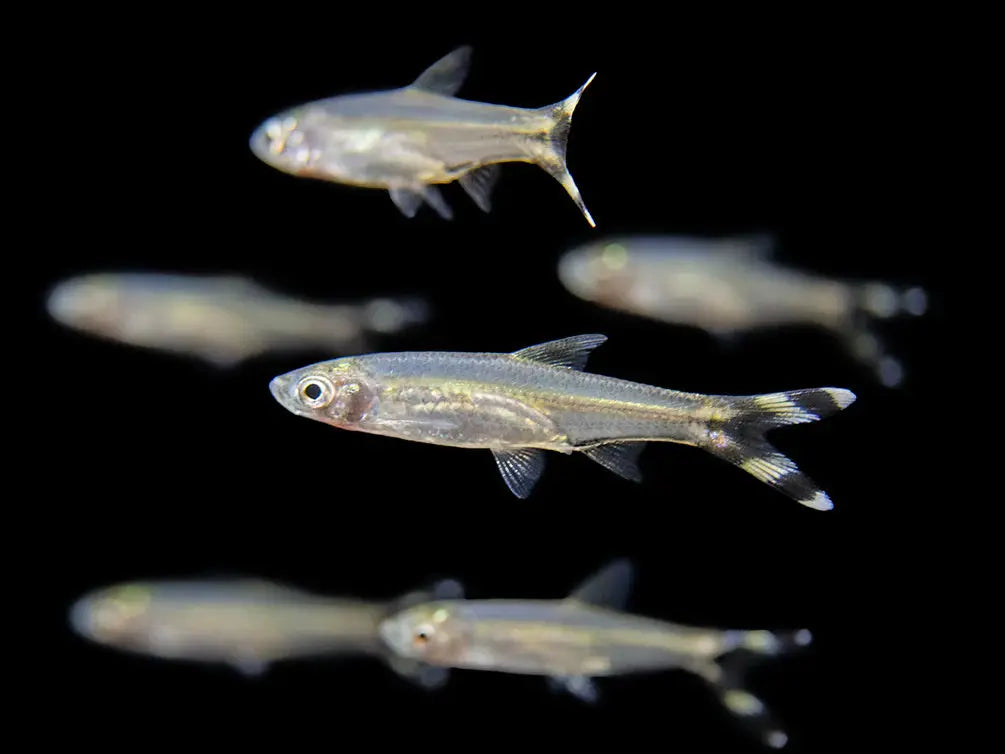
The Scissortail Rasbora (Rasbora trilineata) is a graceful, fast-moving schooling fish best known for its distinctive forked, scissor-like tail and sleek silver body with bold black markings. Peaceful and highly active, this species adds constant motion and elegance to larger community aquariums.
When kept in groups, Scissortail Rasboras display synchronized swimming behavior that's both calming and visually striking.
Key Features
- Signature scissor-shaped tail – forked tail with black edging
- Active schooling fish – constant, graceful movement
- Best kept in groups – enhances natural behavior
- Hardy & adaptable – suitable for beginners
- Planted tank friendly – safe with live plants
- Larger rasbora species – great for mid-to-upper water levels
Care Guide
- Scientific Name: Rasbora trilineata
- Common Name: Scissortail Rasbora
- Adult Size: 4–5 inches
- Temperament: Peaceful
- Diet: Omnivore – flakes, pellets, frozen and live foods
- Tank Size: 30 gallons minimum (larger recommended for schools)
- Temperature: 72–80°F
- pH Range: 6.0–7.5
- Hardness: Soft to moderate
Keep in groups of 6 or more to reduce stress and encourage natural schooling.
Tank Setup Tips
- Provide long, open swimming areas
- Moderate water flow preferred
- Secure lid recommended (active swimmers and jumpers)
- Compatible with tetras, barbs, danios, Corydoras, gouramis, and peaceful loaches
Frequently Asked Questions
Q: Are Scissortail Rasboras good for beginners?
A: Yes – hardy and peaceful with proper tank size.
Q: Do they school tightly?
A: Yes, especially in larger groups and spacious tanks.
Q: Can they live with shrimp?
A: Adult shrimp are usually safe; small shrimplets may be eaten.
Q: Do they need a large tank?
A: Yes – due to their size and active swimming behavior, larger tanks are recommended.
Shop Scissortail Rasbora at Tropical Treasures Wyo
Bring graceful, ever-active schooling fish to your community aquarium with healthy, home-raised Scissortail Rasboras from Tropical Treasures Wyo LLC in Cheyenne, Wyoming.
Explore More Aquarium Products:
Out of stock
Couldn't load pickup availability
Explore Related Aquarium Products: