
Norman’s Lampeye – Poropanchax normani
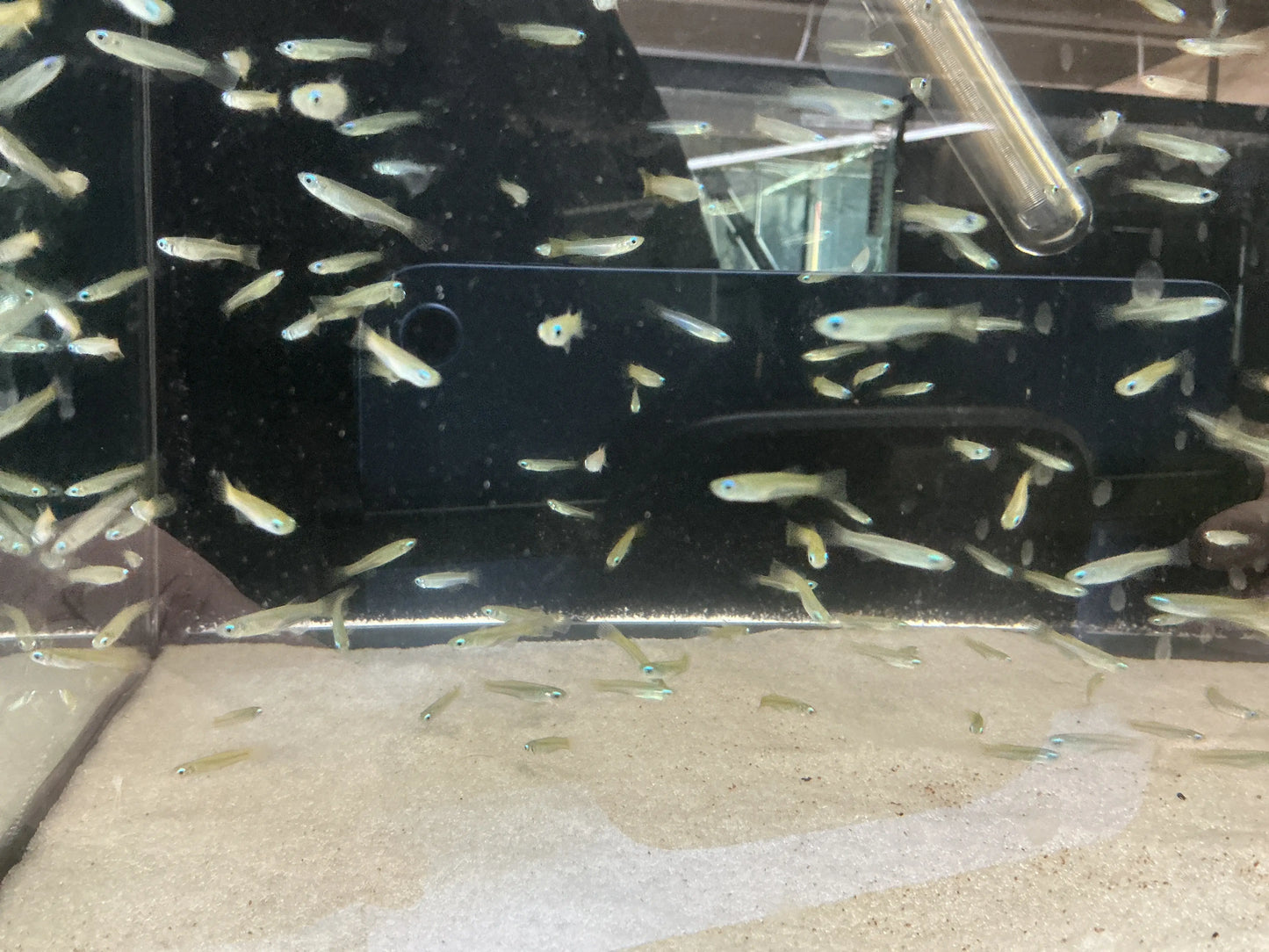
Norman’s Lampeye (Poropanchax normani) is a small, peaceful freshwater fish known for its reflective blue “lampeye” effect. Under aquarium lighting, their eyes appear to glow, creating a subtle but beautiful display when kept in groups.
Native to West Africa, Norman’s Lampeyes are active, hardy nano fish that do well in planted aquariums, peaceful community tanks, and shrimp-friendly setups. Their small size, gentle temperament, and eye-catching blue glow make them a great choice for aquarists who enjoy peaceful schooling fish with a unique look.
Key Features
- Reflective glowing blue eyes
- Peaceful nano freshwater fish
- Active schooling behavior
- Great for planted aquariums and aquascapes
- Good choice for beginner to intermediate aquarists
- Best kept in groups of 6 or more
Care Guide
- Scientific Name: Poropanchax normani
- Common Name: Norman’s Lampeye
- Origin: West Africa
- Care Level: Easy
- Temperament: Peaceful
- Adult Size: Approximately 1.5 inches
- Minimum Tank Size: 10 gallons or larger recommended
- Tank Level: Mid to upper levels
- Water Temperature: 72–80°F
- pH Range: 6.0–7.5
- Diet: Omnivore
Why Choose Norman’s Lampeyes?
Norman’s Lampeyes are a great choice for aquarists who want a peaceful nano fish with a unique visual effect. Their reflective blue eyes catch aquarium lighting beautifully, creating a glowing look that is especially noticeable in groups.
They are active without being aggressive and work well in calm community tanks with other small peaceful fish. Their subtle coloration makes them a great fit for natural aquascapes, planted tanks, and nano freshwater displays.
Ideal Tank Setup
Norman’s Lampeyes do best in a stable, fully cycled aquarium with live plants, gentle filtration, and open swimming space. Floating plants, moss, driftwood, and darker backgrounds can help them feel secure while making their glowing eyes stand out.
Because they can jump, a secure aquarium lid is recommended. Keep them in groups of at least 6 or more for best confidence, color, and natural schooling behavior.
Compatible Tankmates
- Small peaceful tetras
- Rasboras
- Ember Tetras
- Green Neon Tetras
- Pygmy Corydoras
- Otocinclus
- Small peaceful gouramis with caution
- Adult shrimp with proper cover
- Small peaceful snails
Tankmates to Avoid
- Large predatory fish
- Aggressive cichlids
- Fin-nipping species
- Fast, boisterous fish that may outcompete them
- Fish large enough to eat nano fish
Diet & Feeding
Norman’s Lampeyes are omnivores and accept a variety of small aquarium foods. Feed micro pellets, fine flakes, crushed flakes, frozen baby brine shrimp, daphnia, cyclops, and other appropriately sized foods.
A varied diet helps support healthy activity, coloration, and overall condition. Feed small portions that the group can consume quickly.
Care Tips
- Keep in groups of 6 or more
- Use a stable, fully cycled aquarium
- Provide live plants and open swimming areas
- Use a secure lid because they may jump
- Avoid large or aggressive tankmates
- Feed small foods suited for nano fish
Frequently Asked Questions
Why do Norman’s Lampeyes have glowing eyes?
Their eyes have reflective tissue that catches aquarium light, creating the signature blue lampeye effect.
Are Norman’s Lampeyes good for beginners?
Yes. They are hardy, peaceful, and relatively easy to care for in a stable, properly cycled freshwater aquarium.
How many Norman’s Lampeyes should I keep?
Keep them in groups of at least 6 or more for best confidence, schooling behavior, and reduced stress.
Are Norman’s Lampeyes shrimp-safe?
They are generally safe with adult shrimp in planted aquariums with proper cover, though very tiny baby shrimp may be eaten by many fish.
Do Norman’s Lampeyes jump?
Yes, they can jump. A secure aquarium lid is recommended.
What do Norman’s Lampeyes eat?
They eat micro pellets, fine flakes, crushed flakes, frozen baby brine shrimp, daphnia, cyclops, and other small foods.
Are these fish available for shipping?
No. Live fish are available for in-store purchase or local pickup only at Tropical Treasures Wyo in Cheyenne, Wyoming.
Available at Tropical Treasures Wyo
Norman’s Lampeyes are peaceful nano freshwater fish for planted aquariums, shrimp tanks, nano setups, and calm community aquariums. Visit Tropical Treasures Wyo in Cheyenne, Wyoming, to shop nano fish, freshwater fish, shrimp, snails, live aquarium plants, fish food, filtration supplies, and aquarium care products. Live livestock is available for in-store purchase or local pickup only.
Explore More Aquarium Products:
Out of stock
Couldn't load pickup availability
Explore Related Aquarium Products: