
Java Fern Narrowleaf – Microsorum pteropus ‘Narrow’
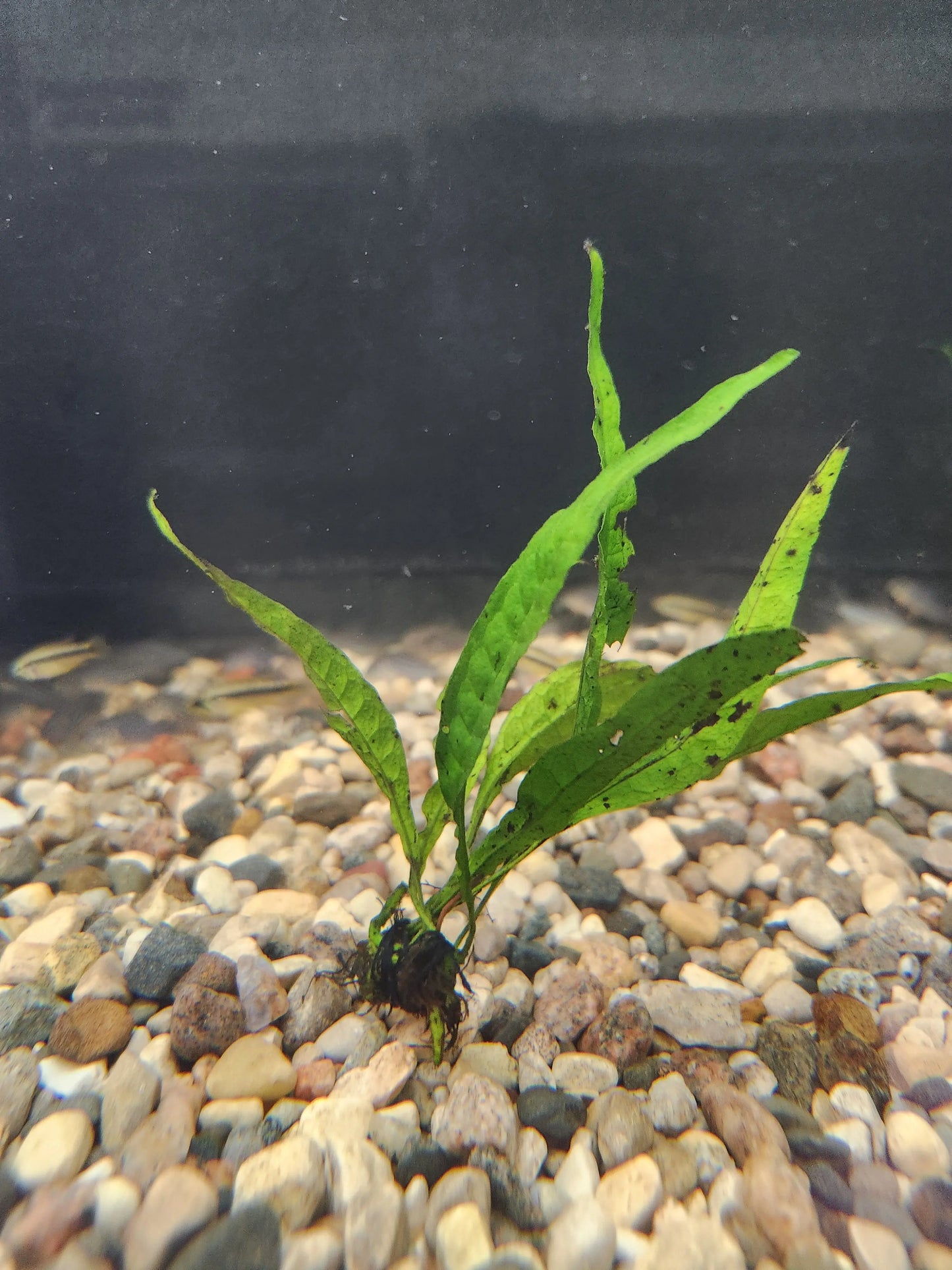
Java Fern Narrowleaf (Microsorum pteropus ‘Narrow’) is a hardy, low-maintenance aquarium plant known for its long, slender green leaves. Compared to standard Java Fern, this variety has a narrower leaf shape that adds elegant texture and vertical movement to freshwater aquascapes.
This easy aquarium plant is perfect for beginners, shrimp tanks, betta tanks, and peaceful community aquariums. Java Fern Narrowleaf thrives in low to medium light, does not require CO2 injection, and should be attached to driftwood, rocks, or aquarium decor rather than buried in the substrate.
Key Features
- Narrow, elongated leaves for a graceful aquascape look
- Hardy low-light aquarium plant
- Great for beginners and low-tech planted tanks
- Does not require CO2 injection
- Safe for shrimp, snails, and peaceful community fish
- Best attached to driftwood, rocks, or decor
Plant Care Information
- Scientific Name: Microsorum pteropus ‘Narrow’
- Common Name: Java Fern Narrowleaf
- Placement: Midground or background
- Lighting: Low to medium
- Temperature: 68–82°F
- pH: 6.0–7.8
- Growth Rate: Slow to moderate
- Care Level: Easy
- CO2: Not required
- Height: Approximately 8–12 inches depending on conditions
Planting & Placement
Java Fern Narrowleaf should not be planted directly into the substrate. Instead, attach the rhizome to driftwood, rocks, or aquarium decor using aquarium-safe glue, thread, or fishing line. Over time, the roots will naturally grip the surface.
Do not bury the rhizome, as this can cause the plant to rot. The roots may be placed near the substrate, but the thick rhizome should remain exposed.
Lighting, CO2 & Nutrients
Java Fern Narrowleaf is an excellent low-tech aquarium plant. It grows well under low to medium lighting and does not need CO2 injection. Liquid fertilizer can help support steady growth, especially in aquariums with low nutrient levels.
Because this plant grows slowly, it is easy to maintain and does not require frequent trimming.
Best Uses in Aquariums
- Low-light planted aquariums
- Beginner freshwater tanks
- Shrimp tanks and fry grow-out tanks
- Betta aquariums
- Community fish tanks
- Natural aquascapes with driftwood or stone
Frequently Asked Questions
Do I plant Java Fern Narrowleaf in the substrate?
No. Java Fern Narrowleaf should be attached to driftwood, rocks, or decor. Burying the rhizome can cause it to rot.
Does Java Fern Narrowleaf need CO2?
No. This plant grows well in low-tech aquariums without CO2 injection.
Is Java Fern Narrowleaf good for shrimp and fry tanks?
Yes. Its leaves and roots provide cover and grazing surfaces for shrimp, fry, and small peaceful fish.
How much light does Java Fern Narrowleaf need?
Low to medium light is usually enough. Strong lighting may encourage algae growth on the slower-growing leaves.
How tall does Java Fern Narrowleaf grow?
It typically grows around 8–12 inches tall, depending on lighting, nutrients, and aquarium conditions.
Available at Tropical Treasures Wyo
Java Fern Narrowleaf is a great choice for aquarists looking for a hardy, low-light plant that adds natural texture to freshwater aquariums. Visit Tropical Treasures Wyo in Cheyenne, Wyoming, or shop online for live aquarium plants, freshwater fish, shrimp, and aquarium supplies.
Explore More Aquarium Products:
Out of stock
Couldn't load pickup availability
Love how tall they are
Explore Related Aquarium Products: