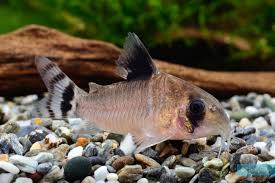
Flag-tailed Panda Corydora (Corydoras sp.)
Flag-tailed Panda Corydora (Corydoras sp.)
Out of stock
Couldn't load pickup availability
🐠 Flag-tailed Panda Corydora (Corydoras sp.)
The Flag-tailed Panda Corydora is a unique and attractive Corydoras variety recognized for its classic panda facial markings combined with a bold flag-like pattern on the tail fin. Peaceful, social, and active, this bottom-dwelling catfish adds charm and personality to freshwater community and planted aquariums.
Like all corys, Flag-tailed Pandas thrive in groups and spend their time foraging along the substrate, helping keep the tank tidy while displaying natural schooling behavior.
Distinct Flag Tail Marking • Peaceful Bottom Dweller • Hardy Community Cory
🌟 Key Features
🐼 Panda-Style Coloration – Black eye patch with white body
🚩 Distinct Flag-Marked Tail – Unique tail pattern sets it apart
🐟 Peaceful Bottom Dweller – Excellent community fish
👥 Schooling Species – Best kept in groups
🧹 Helpful Clean-Up Fish – Consumes leftover food
🌿 Planted Tank Friendly
⚙️ Care Guide
- Scientific Name: Corydoras sp. (Flag-tailed Panda)
- Common Name: Flag-tailed Panda Corydora
- Adult Size: ~2–2.5 inches
- Temperament: Peaceful
- Diet: Omnivore – sinking pellets, wafers, frozen foods
- Tank Size: 20 gallons minimum
- Temperature: 72–80°F
- pH Range: 6.0–7.5
- Hardness: Soft to moderate
💡 Keep in groups of 4–6 or more for best behavior and reduced stress.
💡 Tank Setup Tips
- Use sand or smooth gravel to protect sensitive barbels
- Provide plants, driftwood, or caves for cover
- Gentle to moderate filtration preferred
- Compatible with tetras, rasboras, gouramis, livebearers, and dwarf cichlids
❓ FAQ
Q: Are Flag-tailed Panda Corydoras rare?
A: They are less common than standard Panda Corydoras, making them a desirable variety.
Q: Are they good for beginners?
A: Yes—hardy and peaceful when kept in proper conditions.
Q: Do they clean algae?
A: They mainly consume leftover food, not algae.
Q: Are they shrimp safe?
A: Adult shrimp are generally safe; very small shrimplets may be eaten.
