
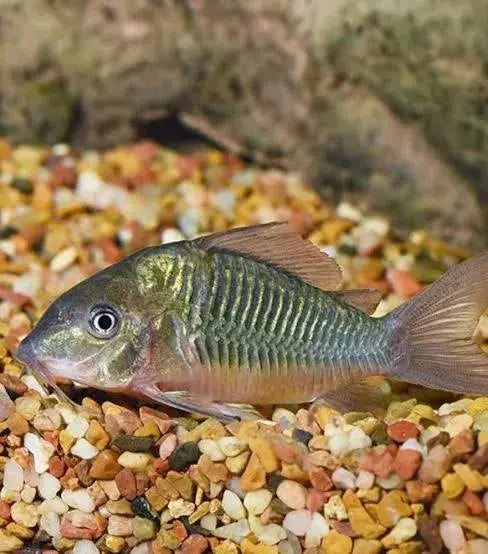
Emerald Green Corydoras (Brochis splendens)
Emerald Green Corydoras (Brochis splendens)
Out of stock
Live fish, shrimp, snails and aquatic plants are not shipped. Visit Tropical Treasures Wyo in Cheyenne, Wyoming or select pickup at checkout.
Couldn't load pickup availability
Species identification: Emerald Green Corydoras are commonly called Emerald Brochis or Emerald Catfish. Their accepted scientific name is Brochis splendens, although Corydoras splendens is still widely used in older references and aquarium listings. This deeper-bodied species grows larger than many familiar Corydoras.
The Emerald Green Corydoras is a peaceful, social freshwater bottom-dwelling catfish known for shimmering metallic green body color and a larger body than many cory catfish. These active fish are most comfortable in groups of their own kind.
Emerald Green Corydoras Care
- Scientific name: Brochis splendens (also widely known as Corydoras splendens; the genus Brochis was revalidated in 2024)
- Adult size: Commonly around 3–3.5 inches; some individuals may approach 4 inches
- Recommended aquarium: 30 gallons or larger, with plenty of usable bottom area for a group
- Water temperature: 72–79°F
- pH: Approximately 6.0–7.5; avoid sudden changes and maintain stable water quality
- Temperament: Peaceful, social and active
- Group size: At least six Brochis splendens; larger groups are preferable when space permits
- Diet: Omnivore; offer quality sinking catfish pellets or wafers plus appropriately sized frozen or live foods
- Care level: Easy to moderate with an established aquarium
Tank Mates
Choose peaceful community fish that tolerate the same temperature and water conditions. Avoid aggressive or predatory fish, and avoid crowding the aquarium bottom.
Aquarium Setup & Substrate
Provide a fully cycled, well-filtered aquarium with soft sand or smooth, rounded fine gravel to protect sensitive barbels. Avoid sharp, jagged substrate. Include plants or driftwood for cover, open foraging areas, and good oxygenation. Keep the substrate clean and perform regular water changes.
Feeding & Group Behavior
Cory catfish are not a substitute for aquarium cleaning. Feed sinking foods directly to the group and check that each fish receives enough food. They may briefly dart to the surface to gulp air, which is normal, but persistent surface activity warrants a water-quality and oxygen check.
Frequently Asked Questions
Is Emerald Green Corydoras the same as Brochis splendens?
Yes. The Emerald Brochis or Emerald Catfish is Brochis splendens, a species also called Corydoras splendens in aquarium trade and older references.
How big do Emerald Green Corydoras get?
Adults commonly reach 3–3.5 inches and may approach 4 inches. They are larger and deeper-bodied than many familiar Corydoras, so allow generous bottom space.
How many Emerald Brochis should I keep?
Keep at least six of the same species together, with more when the aquarium has sufficient floor space. A mature, planted 30-gallon or larger aquarium with open sandy areas is a practical starting point.
Are Emerald Green Corydoras peaceful?
They are generally peaceful, social catfish that do well with similarly peaceful fish sharing their water requirements. Avoid large predators and aggressive bottom-dwellers.
Will Emerald Corydoras eat algae or clean the tank?
No. They search the substrate for food but need regular sinking foods and suitable frozen or live foods. They do not replace aquarium maintenance.
Why do Emerald Brochis sometimes swim to the surface?
Like other Corydoradinae catfish, they can occasionally gulp air at the surface. Frequent unusual gasping should prompt an immediate water-quality and oxygenation check.
In-Store Availability & Livestock Policy
In-store pickup only — no live fish shipping. Please inspect and select your fish before purchase. All live fish sales are final once they leave the store. Our team is happy to answer aquarium-care and troubleshooting questions.
Explore Related Aquarium Products: